How to Generate New Care Home Enquiries: A Complete Strategy Guide

Written by Len Burgess, Founder
Len Burgess is the founder of TRG Digital, a specialist digital agency for the UK care sector. He has worked in SEO and digital marketing for over a decade and writes about search, ranking factors and lead generation through a data-first lens: read the data, apply best practice and logic, test, and repeat until you rank.
Connect on LinkedIn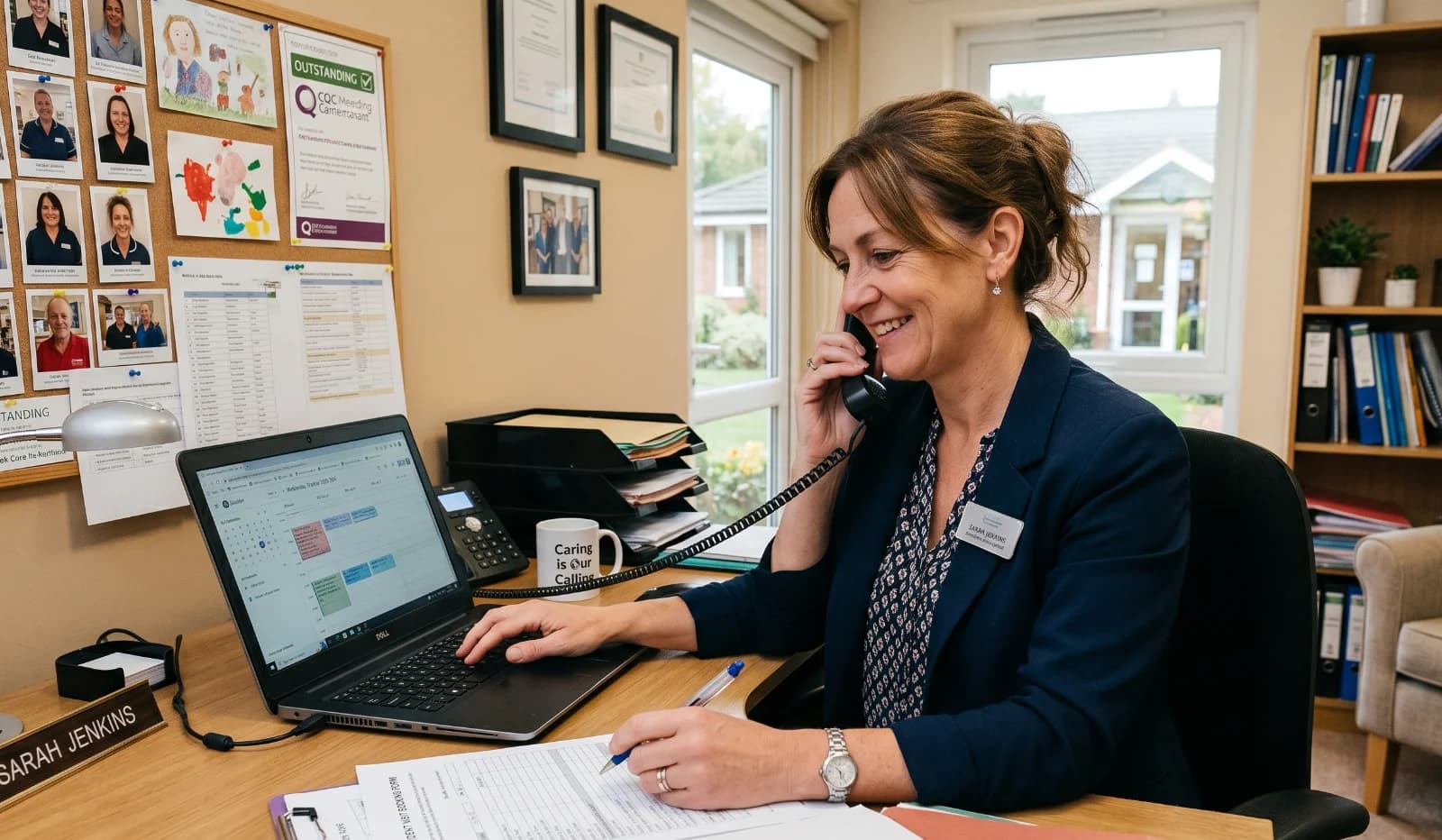
If you want to generate new care home enquiries consistently, you need to understand that today’s care seeker does not follow a straight line. The journey from realising a loved one needs residential care to actually moving them in is fragmented, emotional, and often chaotic.
Multiple family members research across different devices, phone calls go unanswered, and the window of opportunity is brutally short. For care home owners and marketing managers, the financial stakes are stark: one missed enquiry opportunity can cost a care home £70,000 per year in lost residents’ fees, you can use our room availability calculator to see the cost.
This article sets out a complete, data-backed framework for filling empty beds faster, covering the channels, tracking methods, and conversion tactics that actually work.
The New Reality of the Care Seeker Journey
The way families search for care has shifted permanently. Understanding the psychology and timeline of the modern care seeker is the foundation of any effective enquiry generation strategy. Without this context, even the most sophisticated marketing budget will underperform.
The critical catalyst event drives everything. Demand for care is rarely a planned, leisurely decision. It is triggered by a crisis: a fall at home, a sudden escalation in dementia symptoms, gas left on overnight, or an unexpected hospital discharge. These events can happen at 3 AM on a Sunday, 365 days a year. Your marketing presence must always be on because the family’s research starts the moment the crisis hits, not during office hours.
Once the catalyst occurs, the clock starts ticking. Research shows the average care home search now takes nearly five weeks, with an additional two weeks required to move the resident in.
Critically, over 90 per cent of care seekers report that a search lasting more than six weeks is a very stressful experience. This means families are operating within a two-to-five-week window of active research before a decision is made. If you do not capture their attention and build trust within that compressed timeframe, they will choose another home, and you will have lost them as a prospect.
Adding further complexity is the family cluster effect. Most care decisions involve three or more family members, often contacting the care home from different devices and channels. One sibling might call from their office phone, another might submit a web form from a mobile, and a third might email from a tablet.
Without a system to unify these contacts, a single family enquiry can look like three separate, unconnected leads, creating confusion and slowing response times. Speed of response and clarity of information directly impact your conversion rate, and the family cluster dynamic makes both harder to achieve without deliberate planning.
Why the "Now Buyer" Mindset Changes Everything
The pool of active 'now buyers', people actively searching for a care home at any given moment, is small in any given local area. The size of this pool varies by town, population density, and whether the setting is urban or rural, but the principle holds everywhere: you cannot afford to miss a single one. Unlike retail or hospitality, where broad brand awareness campaigns can pay off over months, care home marketing is a precision exercise in capturing high-intent demand the moment it appears.
Omnipresence is the practical response to this reality. Because the family cluster is researching across Google, care directories, and social media simultaneously, you need to be visible on all three.
A family member might discover your home via a Google search, then check your reviews on careAssura, and then visit your Facebook page to see recent activity photos. If you are absent from any of these touchpoints, you create doubt.
Consistency of message, availability of information, and speed of response across every channel are what convert a now buyer into a resident.
Work with TRG
Struggling to fill your beds?
See how we turn local searches into pre-qualified enquiries, delivered straight to your home.
Tracking What Actually Drives Move-Ins (Beyond Vanity Metrics)
Most care homes track enquiries in the loosest sense: they count phone calls and web form submissions. Very few can link those enquiries to confirmed move-ins. This gap between activity and outcome is where marketing budgets go to die. You might celebrate a spike in calls from a directory listing, but if none of those calls results in a viewing, the spend is wasted. The only metric that matters is cost per confirmed admission.
The attribution problem is particularly acute in the care sector because the journey is multi-touch and multi-person. A daughter might click a Google Ad, browse your dementia care page, and leave without calling. Two days later, her brother searches your home’s name directly and phones the number on your website. A week later, their mother’s social worker emails a referral form. Which channel gets the credit? Without proper tracking, the answer is usually guesswork.
Dynamic call tracking solves a significant portion of this puzzle. By assigning a unique phone number to each website visitor, you can track their entire journey across multiple sessions and devices, even if they do not convert immediately. When that visitor eventually calls, the system knows which ad, directory listing, or organic page triggered their first visit. This persistent identifier is invaluable for understanding which marketing messages actually resonate with care seekers and which channels are driving genuine intent.
Unifying the family cluster is the next essential step. Modern CRM tools designed for the care sector can automatically group contacts sharing the same resident name or enquiry details. This stops the chaos of three family members calling in and being treated as separate leads, enabling seamless handoffs between your team members. When a son calls to follow up on an email his sister sent, your admissions team should see the full history instantly.
With tracking and unification in place, you can calculate true cost per admission. Divide your total channel spend by the number of confirmed move-ins, tracked via call recording and CRM data. This is your only real ROI metric. Everything else, impressions, clicks, and even enquiry volumes, is secondary. A channel that generates fewer enquiries but higher move-in rates is far more valuable than one that floods your phone with unqualified calls.
Filling the Gap: Paid Advertising for Care Home Enquiries
The top-ranking content for care home enquiry generation focuses heavily on directories and call tracking, but almost entirely ignores paid advertising strategy. This is a significant gap, and it represents an opportunity for care homes willing to invest in targeted paid channels. When a family is in the now buyer window, paid search and social advertising can place you directly in front of them at the exact moment of need.
Google Ads remains the most direct route to capturing high-intent demand. Target keywords that signal immediate need: care home near me with availability, dementia care home Leeds, or emergency respite care home. These searchers are not browsing; they are looking for a solution right now. Use ad extensions to display your CQC rating, Google Reviews star rating, and location. A well-structured campaign with dedicated landing pages for each care type and location will consistently outperform a generic home page link.
Retargeting addresses the family cluster challenge directly. A daughter might visit your site during her lunch break, read a few pages, and get distracted before calling. With pixel-based retargeting on Facebook and Google, you can serve her a gentle reminder later that evening when she is discussing options with her siblings. Offer a video tour of the home or a downloadable guide to choosing a care home as a lead magnet. This keeps your home top of mind during the critical research window without being intrusive.
Local Service Ads, Google’s pay-per-lead model, are underutilised in the care sector. These ads appear at the very top of search results, above traditional paid ads and organic listings, and they guarantee a phone call. You only pay for valid enquiries, and the Google Screened badge adds a layer of trust. For care homes in competitive local markets, LSAs can be a cost-effective way to secure enquiries without the complexity of managing keyword bids.
Optimising Your Digital Presence for Local Search
Paid advertising captures demand, but a strong organic presence builds trust and reduces your long-term cost per acquisition. For care homes, local search visibility is not optional. When a family begins researching, their first impression of your home often comes from your Google Business Profile, your website’s location pages, and your online reviews.
Your Google Business Profile is non-negotiable. Verify your profile, ensure your categories are correct, and post regular updates: events, photos of activities, news about CQC inspections, and seasonal messages. This profile is frequently the first thing a family sees when searching for your home by name or for care homes in your area. An incomplete or neglected profile suggests an inattentive operator. A vibrant, active profile signals a well-run home.
Local SEO for care homes requires dedicated location-specific pages on your website. A page titled Care Home in Harrogate should not be a thin, templated afterthought. Embed a map, list nearby amenities that families care about such as parks, GP surgeries, and community centres, and include genuine testimonials from residents and relatives at that specific home. These pages serve both search engines and anxious families who want to understand the local context.
Work with TRG
Want more private enquiries?
We put your home in front of the families actively searching for care near you.
Reputation management extends beyond the major care directories. While care home review sites are vital and should be actively managed, Google Reviews and your CQC rating are equally powerful trust signals. Families read reviews across multiple platforms. Respond to every review, positive and negative, professionally and promptly. A thoughtful response to a critical review demonstrates accountability and care, qualities that matter enormously to families making one of the most difficult decisions of their lives.
Video marketing for virtual tours addresses a fundamental need: families want to see the home before they visit. A short, professional video tour embedded on your home page and Google Business Profile reduces friction and builds emotional connection early. It allows family members to share a sense of the environment with each other, even if they are in different parts of the country. This is not about glossy production values; it is about giving an honest, warm preview of daily life in your home.
The Conversion Playbook: Speed, Speech, and Nurture
Generating the enquiry is only half the battle. What happens when the phone rings or the form is submitted determines whether that enquiry becomes a viewing and, ultimately, a move-in. The conversion playbook focuses on three areas: speed of response, understanding caller intent, and nurturing those who are not yet ready to commit.
Speed to lead is the single highest-impact change most care homes can make. Answer every inbound call within 30 seconds. A missed call is a missed £70,000 opportunity. If your reception desk is busy with visitors or care duties, use a specialist call answering service that understands the care sector. These services can handle initial enquiries warmly, capture key details, and schedule callbacks, ensuring no family goes to voicemail and then dials your competitor.
Speech analytics offers a powerful lens into what is actually happening on your enquiry calls. Record and analyse calls to identify which marketing messages are landing and which are causing confusion. Are families asking about dementia care because your blog content addressed it clearly, or are they confused by your pricing page? Do callers mention specific directory listings or Google Ads? This intelligence allows you to adjust your website content and marketing messages based on real caller questions, not assumptions.
Email nurture sequences recognise a fundamental truth: most families are not ready to book a viewing on the first call. They are gathering information, comparing options, and consulting with siblings. Capture their email address through downloading our brochure form and enrol them in a short, helpful sequence. The first email welcomes them and includes the virtual tour. The second answers common questions about fees, care plans, and daily routines. The third invites them for a no-obligation coffee visit. This sequence keeps your home present and helpful without applying sales pressure.
Referral partnerships represent an enquiry source that few care homes systematically develop. Build relationships with local hospital discharge planners, social workers, GPs, and community nurses. Provide them with a simple, one-page referral form and a dedicated phone line. Make it easy for them to refer patients and families to you. These professional referrals often carry higher trust and convert faster than directory or search enquiries because they come with an implicit recommendation.
Measuring Success: The Care Home Marketing Dashboard
Without a clear dashboard, marketing becomes a cost centre rather than a growth driver. The metrics that matter in 2026 are outcome-focused, not vanity metrics. Track these numbers monthly and review them with your team or agency.
Cost per confirmed admission is the headline figure. Divide the total marketing spend across all channels by the number of residents who actually moved in. This number tells you whether your strategy is working at the most fundamental level. Enquiry-to-viewing conversion rate should target above 25 percent; if it is lower, examine your call handling and speed of response. Viewing-to-move-in conversion rate should target above 50 percent; a lower figure suggests issues with the home itself, the admissions process, or a mismatch between marketing promises and reality. Average time from first enquiry to move-in should trend downwards as your systems improve.
Channel performance review is a quarterly discipline. Which channel delivered the most move-ins last quarter: Google Ads, a specific directory, or professional referrals?
Double down on what works and cut what does not. The missed opportunity audit is a weekly habit. Review call logs and email response times. How many calls went to voicemail? How many emails went unanswered for more than four hours? Fixing these leaks is often the fastest route to more move-ins.
Conclusion: Your Next Steps to Fill Empty Beds Faster
The care homes that thrive will be those that treat enquiry generation as a measurable, optimisable system rather than a hope-based activity. The framework rests on three pillars. First, track everything back to a confirmed move-in, using dynamic call tracking and CRM unification to connect marketing spend to real outcomes. Second, be omnipresent across paid, local, and directory channels so that when the family cluster begins researching, your home appears everywhere they look. Third, convert faster with speed of response, speech analytics, and nurture sequences that respect the emotional weight of the decision.
At TRG Digital, we build digital solutions that help care home owners generate new online enquiries and fill empty beds faster. If you want to see how your current enquiry system stacks up, get in touch for a free audit.