Why Are Nursing Homes Turning Away From Social Services? The 80% Funding Gap Explained

Written by Len Burgess, Founder
Len Burgess is the founder of TRG Digital, a specialist digital agency for the UK care sector. He has worked in SEO and digital marketing for over a decade and writes about search, ranking factors and lead generation through a data-first lens: read the data, apply best practice and logic, test, and repeat until you rank.
Connect on LinkedIn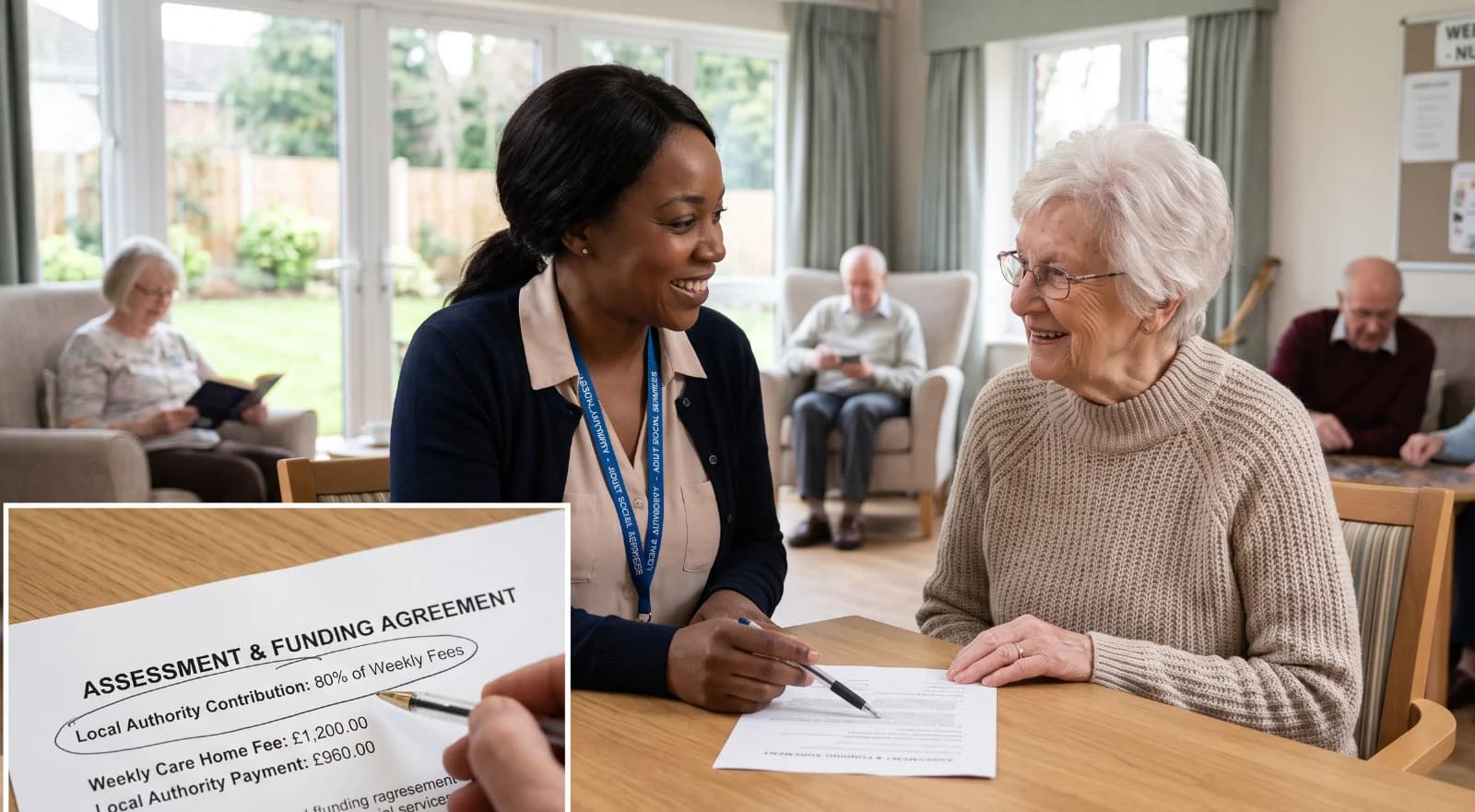
The search for a care home is rarely straightforward. It arrives wrapped in guilt, urgency, and a tangle of financial questions that most families feel ill-equipped to answer.
Recently, that process has become even harder. A quiet but seismic shift is reshaping the care sector: local nursing homes are increasingly refusing placements funded by social services.
The reason is brutally simple. Councils and local authorities are paying roughly 80%-85% of the weekly nursing fee, leaving providers to absorb a loss on every publicly funded bed.
For families, this means longer waits, fewer choices, and the unsettling reality that the system designed to catch their loved one is letting them slip through. Understanding why this is happening, and what it means for Social Care Costs, is the first step towards regaining some control.
So keep reading and get all the details about social care costs and how it's impacting Nursing Homes.
Before you do keep reading, we have created a funding calculator that explains all the nuances of local authority funding; it's worth using.
The Current State of Social Care Costs in the UK
To grasp the scale of the problem, you need to understand the numbers that underpin the care sector right now. The average UK nursing home fee sits at £1,535 per week, according to multiple reports.
That works out to £6,140 per month, or £79,820 per year. For residential care, the average is lower at £1,298 per week, while dementia nursing care pushes the figure even higher, to around £1,564 per week.
These are not abstract statistics. They represent the real cost of providing 24-hour support, clinical oversight, meals, laundry, activities, and the infrastructure of a regulated, safe environment.
Local authorities, however, operate in a different financial universe. Total adult social care expenditure in England reached £32 billion in 2023/24, a figure that sounds vast until you divide it across the millions who need support. Councils are legally empowered to set their own "usual rates" for care placements, and these rates are almost universally lower than the market cost.
In many cases, the council offer falls short by around 20% (on average). A home that needs £1,535 to break even on a nursing bed might receive £1,228 from the local authority, or less. The gap is not a minor accounting discrepancy. It is a structural deficit that forces providers to make impossible choices and, more recently, drastic action, with overhead costs increasing.
When you add the rising cost of energy, food, insurance, and the fierce competition for qualified nursing staff, the economics of accepting council-funded residents become harder to justify with each passing quarter. Social Care Costs, in the truest sense, are being borne by the providers themselves.
The "80% Rule": Why Local Authorities Are Paying Less
The funding gap is not an accident. It is the logical endpoint of a means-testing system that was never designed to cover the full cost of complex nursing care. When a person seeks council support, their finances are assessed against strict thresholds.
In England, the upper capital limit remains £23,250. Above that figure, you are a self-funder and receive no direct council contribution. Below the lower limit of £14,250, the council provides maximum support, though the resident must still contribute most of their income, minus the Personal Expenses Allowance of £30.15 per week. Between those two thresholds, a tariff income of £1 per week for every £250 of capital above £14,250 applies.
Work with TRG
Struggling to fill your beds?
See how we turn local searches into pre-qualified enquiries, delivered straight to your home.
The problem is that even when the council agrees to fund a placement, it is under no obligation to meet the home's actual fee. Councils negotiate block contracts and spot purchase agreements that drive rates down, often to a level that simply does not cover the cost of a registered nurse on every shift, let alone specialist dementia training or end-of-life care.
The £30.15 Personal Expenses Allowance, intended to preserve dignity, also means the resident has virtually no disposable income to contribute towards a top-up themselves. The result is that social services only paying 80% of the true cost has become the norm rather than the exception. The £32 billion spent nationally is, in per-person terms, spread too thin to keep pace with the complexity of need presenting at care home doors in 2026.
The Provider's Dilemma: Financial Viability vs. Duty of Care
For a care home operator, the decision to refuse a council placement is rarely ideological. It is a matter of survival. Accepting a resident at 80% of the required fee means running that bed at a loss, month after month. A single such placement might be absorbed. Ten or fifteen, which is common in homes with a history of working closely with the local authority, can destabilise the entire operation. The money that should be spent on staff development, building maintenance, or activity programmes is instead diverted to plug the hole left by underfunded fees.
This financial strain has a direct impact on quality. The Care Quality Commission inspects against standards that do not flex downwards because a home's margins are thin. Hiring and retaining a dementia-trained nurse or a specialist in palliative care costs significantly more than the baseline council rate accounts for.
Historically, many local nursing homes operated a model of cross-subsidisation. Higher fees from private residents effectively covered the shortfall on publicly funded beds. That model is breaking down. Rising costs across the board mean the surplus from private fees is no longer large enough to subsidise a growing number of loss-making council placements. Faced with the choice between protecting their CQC rating and accepting a resident who will cost them money, many providers are now simply saying no. They are protecting their business and the quality of care for the residents already in their charge.
The Shift Towards Private Residents: A Two-Tier System?
What emerges from this financial pressure is a market that increasingly favours those who can pay their own way. Homes that once maintained a balanced mix of public and private residents are now actively reserving beds for private nursing home residents who can pay the full market rate. From a business perspective, the logic is unassailable. A private resident paying £1,535 per week generates the revenue needed to run the service properly. A council-funded resident at £1,228 does not.
The consequence is a two-tier system that is becoming more entrenched. Self-funders often experience shorter waiting times, wider choice of homes, and greater flexibility in securing a room in their preferred location. Council-funded residents, by contrast, may wait weeks or months for a placement, often in a home that was not their first choice and may be miles from family.
In some parts of the country, particularly areas with lower property values and less private wealth, "care deserts" are forming. If a region has few self-funders, the local homes cannot cross-subsidise, so they either close or convert to serve exclusively private clients from outside the area. The council is left scrambling to place residents in whatever beds remain, sometimes in neighbouring counties.
There is a further, deeply unsettling risk for families who are currently self-funding. If a resident's savings dwindle and they fall below the £23,250 upper capital limit, the council becomes responsible for funding their care. But if the home no longer accepts the council rate, the resident may be forced to move. The prospect of a frail, elderly person with dementia being uprooted from a familiar environment because their savings ran out is not hypothetical. It is a reality that financial advisers and care navigators are increasingly warning about.
Work with TRG
Want more private enquiries?
We put your home in front of the families actively searching for care near you.
What Nursing Home Owners Can Do About the Funding Gap
If the council rate no longer covers the cost of a nursing bed, the only sustainable answer is to change the mix of people filling those beds. That is easier said than done, because most homes have historically relied on the local authority as a passive referral engine. Beds were filled because social services rang, not because families found the home and chose it. The homes weathering this shift best are the ones that have built their own pipeline of enquiries, a steady flow of private families who arrive through search, compare the home on its merits, book a visit, and move in at the full weekly rate.
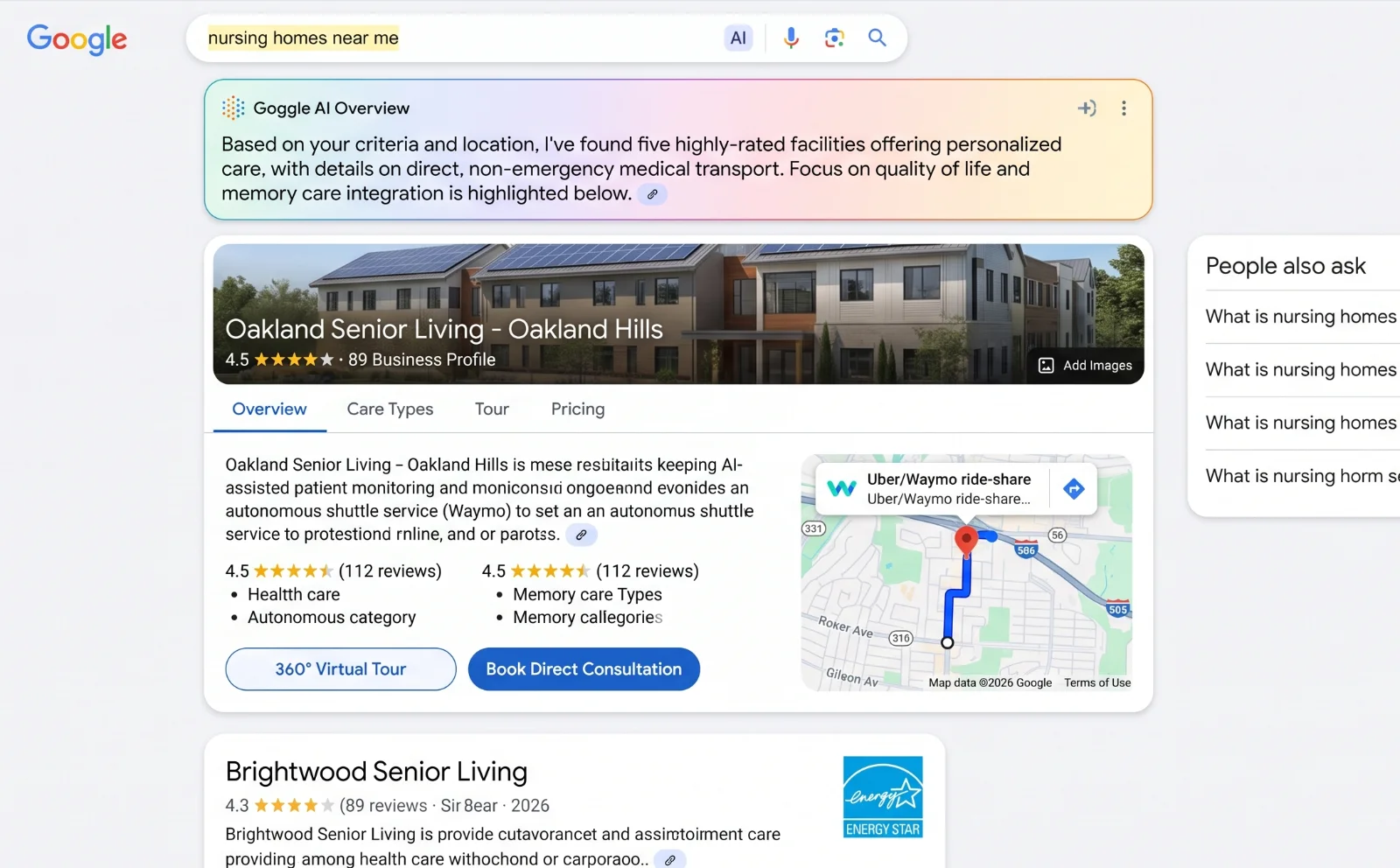
That pipeline does not appear on its own. It is built deliberately, and it is built online, because that is where the search now begins. A daughter at 11pm on her phone, typing "nursing homes near me" into Google, is the modern equivalent of the referral call that used to come from the council.
The question for owners is simply whether your home is the one she finds, or does she find your competitor up the road?
How TRG Digital Helps Homes Attract Private Residents
This is the work TRG Digital does, and care is the only sector we work in. The proposition is narrow on purpose. Websites optimised for search and built around the questions families actually ask. Local SEO and Google Business Profile management, so your home appears first when someone searches for care in your town. Google and Meta campaigns measured on enquiries rather than clicks. Conversion work that turns the traffic your site already receives into phone calls and booked visits.
Alongside all of that sit proprietary care tools, including funding calculators, NHS Continuing Healthcare and Funded Nursing Care checkers, and live room availability.
These matter more than they might sound. They give a researching family a reason to land on your own website rather than a national directory, and a reason to leave their details once they are there, at the exact moment they are weighing up their options.
The Arithmetic of an Empty Bed
The numbers are worth stating plainly, because they are the same numbers set out earlier in this article, viewed from the other side of the ledger.
On a £1,535 private room, a council placement at roughly 85% leaves around £230 a week on the table. That is close to £12,000 over a year, on a single bed. An empty bed costs considerably more, because the staffing, heating, insurance, and compliance costs continue regardless of whether anyone is in the room.
Set against those figures, the cost of building a proper digital presence is a rounding error. Every private resident it brings in restores the margin that funds staff development, training, and building maintenance, which are the very things a strong CQC rating depends on. If your phone only rings when social services call, that is a marketing problem as much as it is a funding problem.
Conclusion
The funding gap described throughout this article is not going to close on its own, and if anything, it could increase further with more government focus on 'fixing' social care.
Councils are constrained by budgets that have not kept pace with the true cost of nursing care, and providers cannot indefinitely absorb the difference. For families, that means fewer choices and longer waits. For owners and managers, it means the old model of cross-subsidy is no longer a strategy; it is a slow leak.
The homes that come through this in good shape will be the ones that stop waiting to be found and start being chosen. That begins with visibility, continues with a website that converts, and ends with a bed filled at a rate that actually funds the care you provide.
TRG Digital offers a free website grade and a review with no obligation, showing you exactly where enquiries are being lost before another quarter goes by. Start today by contacting us using the link below.