Nursing Home SEO: How to Fill Empty Beds and Generate Enquiries

Written by Len Burgess, Founder
Len Burgess is the founder of TRG Digital, a specialist digital agency for the UK care sector. He has worked in SEO and digital marketing for over a decade and writes about search, ranking factors and lead generation through a data-first lens: read the data, apply best practice and logic, test, and repeat until you rank.
Connect on LinkedIn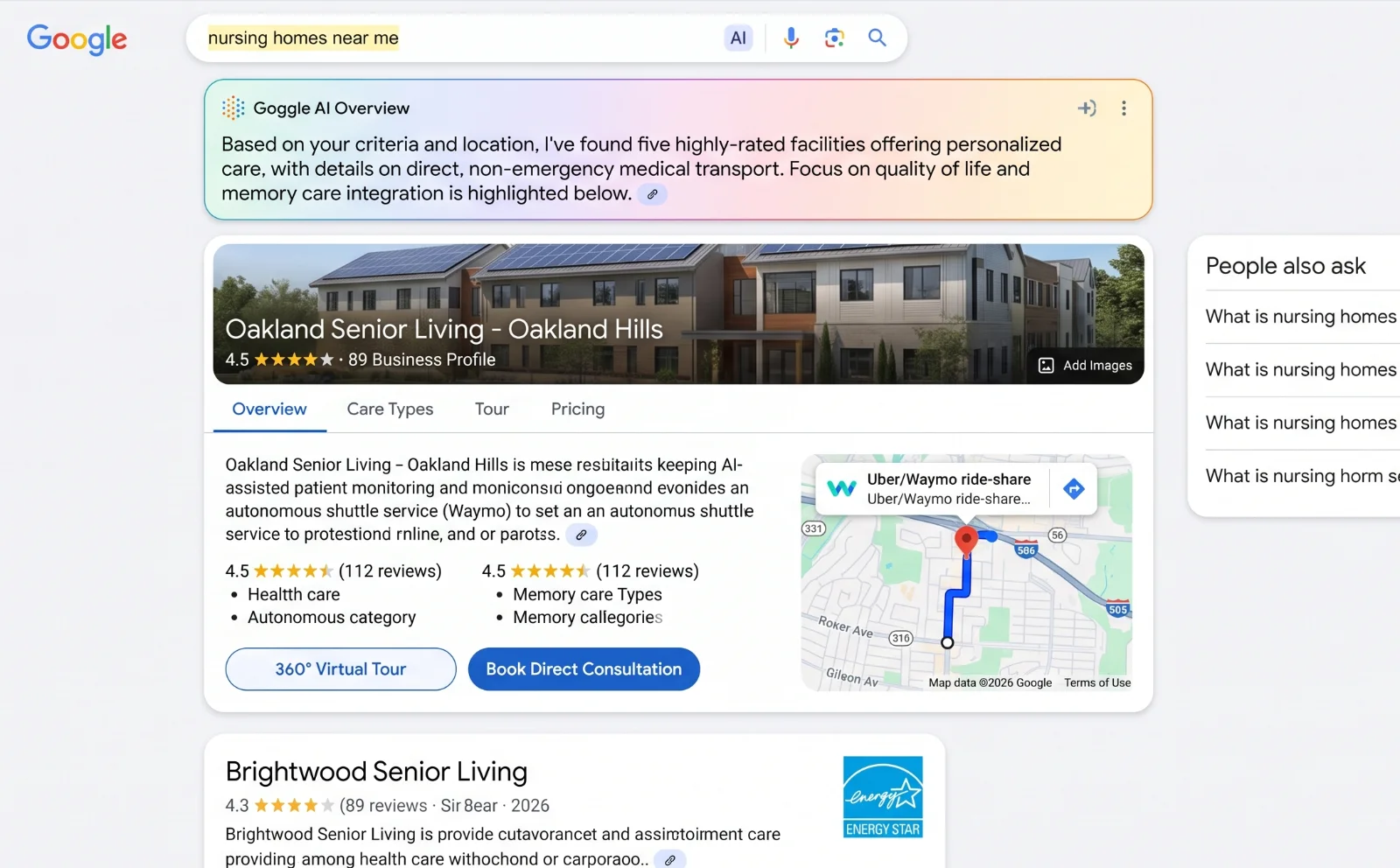
Every empty bed in your nursing home represents a family you haven't reached, a revenue stream that has dried up, and a fixed cost that continues to drain your bottom line regardless of occupancy.
At TRG Digital, we work exclusively with nursing homes across the UK to reverse that equation. Our entire agency exists for one reason: to increase your online nursing home enquiries through search engine optimisation that actually delivers measurable results.
When over 90% of families begin their search for care online, your visibility in search results isn't a marketing nice-to-have. It's the difference between a waiting list and a financial crisis.
This guide will walk you through exactly how nursing home SEO fills beds, what you should expect to invest, and how to track every pound of return.
By the end, you'll understand why the homes dominating page one in your local area aren't necessarily the best care providers; they're simply the ones families can find.
So keep reading to get all the details and find out more about how we at TRG Digital can help you.
The True Cost of an Empty Bed in a UK Nursing Home
To understand why nursing home SEO matters, you first need to confront the brutal economics of an empty bed. We built this empty bed calculator to let you fully understand the costs.
Leeds City Council operates residential care homes at £1,188.22 per week. That figure, while specific to one authority, provides a useful baseline for calculating what a vacancy truly costs you.
A single unfilled bed at that rate drains approximately £61,787 from your annual revenue. That's one bed, sitting empty, while your staffing rotas, utility bills, maintenance contracts, and CQC compliance costs remain entirely unchanged.
Now multiply that across a typical 45-bed home running at 80% occupancy. Nine empty beds at £1,188 per week translates to over £556,000 in lost annual revenue.
These aren't abstract numbers. They represent the gap between a sustainable care business and one that struggles to maintain staffing levels, invest in facilities, or weather unexpected regulatory costs. Fixed costs in nursing care are relentless. Your nurses, carers, kitchen staff, laundry services, and building overheads don't scale down when a resident discharges. Every empty bed is pure loss.
The opportunity works both ways. A Leeds care home generated £180,000 in additional annual revenue simply by filling 12 empty beds. That's not a theoretical projection; it's a documented outcome from a focused marketing investment. When you frame SEO spending against these figures, the conversation shifts. This isn't a cost centre competing for budget against clinical priorities. It's an occupancy strategy that directly funds everything else you want to achieve.
Why Families Find You (or Don't): The 2026 Search Landscape
Over 90% of Families Start Online
The search behaviour of families seeking care has fundamentally changed, and the statistics confirm what most nursing home operators already suspect.
Over 90% of families now begin their care home or nursing home search online, according to research. What matters more than the headline figure is the context in which these searches happen. Most are triggered by a crisis event: a fall at home, a sudden hospital discharge, a rapid deterioration in a parent's condition that makes independent living untenable overnight.
These aren't leisurely research sessions conducted over weeks. They're urgent, often same-day searches made by adult children under enormous emotional and time pressure, and the key term here is adult children who are incredibly tech- and search-savvy.
Work with TRG
Struggling to fill your beds?
See how we turn local searches into pre-qualified enquiries, delivered straight to your home.
In that environment, search position is everything. Families rarely browse beyond page one of Google. If your nursing home sits on page three for "care homes near me," you may as well not exist. The language families use also matters more than many operators realise. Despite needing nursing-level care, the vast majority search for "care homes" rather than "nursing homes." Your SEO strategy must target both terms, because the family searching "care homes Manchester" may well need exactly the clinical expertise your nursing home provides, but they'll never find you if your content only speaks to "nursing home" queries.
This is just one of many nuances that most nursing home operators are not aware of.
The Rise of AI Search and Zero-Click Results
The 2026 search landscape presents a new challenge that most nursing home marketing hasn't yet addressed. Families are increasingly asking ChatGPT, Google AI Overviews, Claude, and Perplexity for care home recommendations before they ever click a traditional search result.
These AI systems don't crawl the web in real time. They draw from indexed, authoritative, well-structured website content that already exists. If your nursing home's online presence is thin, outdated, or poorly structured, you are invisible to AI-driven discovery entirely.
This shift demands a specific technical response. Structured data markup, comprehensive FAQ content that directly answers family questions, and consistent NAP (name, address, phone) citations across every directory and listing are no longer optional.
They're the signals AI systems use to determine which homes to recommend. At TRG Digital, we optimise nursing home websites for both traditional search and AI-driven discovery simultaneously. The goal is simple: your home should appear wherever families look, whether that's a Google search, an AI overview, or a voice assistant query on someone's kitchen counter during a difficult conversation.
The Three Pillars of Nursing Home SEO That Fill Beds
Pillar One: Local Search Dominance
Local search is where nursing home enquiries are won or lost. When a family searches "care homes near me" or "nursing homes Leeds," Google serves a local pack of three results above the organic listings. Appearing in that 3-pack is the single highest-impact SEO outcome for any nursing home. The path there runs through several interconnected elements.
Your Google Business Profile must be meticulously optimised. That means correct categories, comprehensive service listings, recent photos of your facilities and communal spaces, regular posts about activities and availability, and a steady stream of genuine reviews. Local citations and directory consistency matter enormously. Your name, address, and phone number must appear identically on carehome.co.uk, the Live Well Directory, council listings, NHS service pages, and any regional care directories. Even small discrepancies confuse search engines and dilute your local authority.
Geo-targeted content completes the local picture. Pages and blog posts targeting "nursing homes in Birmingham" or "dementia care in Leeds" must contain genuinely useful local information, not keyword-stuffed filler. Talk about the area, local amenities, transport links, and what makes your location distinctive. Search engines reward content that demonstrates real local relevance.
Pillar Two: Targeted Landing Pages That Convert
Driving traffic to a generic homepage wastes your SEO investment. Each nursing home needs dedicated landing pages for its primary care types: general nursing, EMI nursing, dementia care, respite care, and palliative care. These pages must answer the questions families are actually asking, often under significant stress.
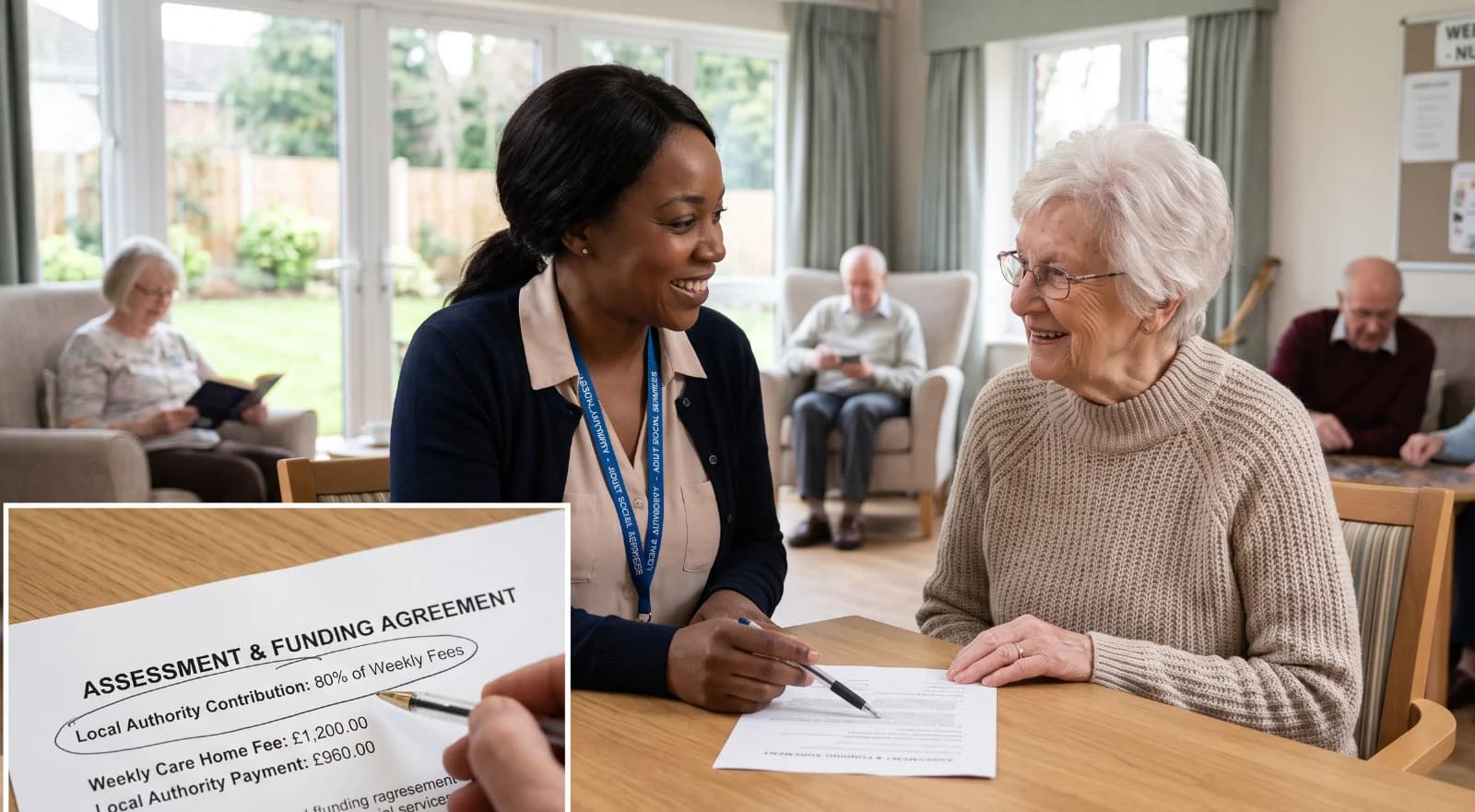
What does care cost? What funding options exist, from self-funding to council support to NHS continuing healthcare? What did your last CQC inspection find? What are your staff-to-resident ratios, particularly at night? What activities and therapies do you offer? What's your visiting policy? These aren't brochure points; they're the decision-making criteria families use to shortlist homes.
Trust signals belong on every landing page. Publish your CQC inspection results openly, including any areas for improvement and what you've done about them. Showcase staff qualifications and longevity. Include photo galleries of communal spaces, resident rooms, and gardens. Video walkthroughs give families a sense of your home before they visit. Resident and family testimonials, ideally linked to verified reviews, provide social proof when it matters most.
Every landing page needs a clear, low-friction conversion path. A prominent phone number, a simple enquiry form, and a "request a callback" option accommodate families who may be searching at 11pm from a hospital discharge lounge. The pages that competitors neglect- dementia-specific guidance, transparent cost information, detailed quality ratings- are precisely the pages that demonstrate real expertise and build the trust that generates nursing home leads.
Pillar Three: A Website Built to Win Residents
Your website is your digital front door, and families make assumptions about the quality of your care based on what they find there. A slow, dated, or confusing website doesn't just frustrate visitors. It communicates something worse: that your home may be equally outdated and poorly managed.
The technical fundamentals of SEO, mobile-first design, fast load times, clear navigation, and secure hosting aren't just about pleasing Google. They're about respecting families who are making one of the most difficult decisions of their lives.
Most crisis searches happen on mobile phones. If your site loads slowly, displays awkwardly, or hides your phone number behind menus, you lose enquiries to competitors whose sites work flawlessly. Click-to-call buttons must be prominent. Enquiry forms must be short and straightforward. Answers to common questions must be visible without having to dig through multiple pages.
Work with TRG
Want more private enquiries?
We put your home in front of the families actively searching for care near you.
Content architecture follows a clear hierarchy: homepage to care type pages to individual home pages to contact and enquiry. Each level answers progressively specific questions and guides families naturally toward getting in touch.
Our suite of tools, available with all new website builds, tracks every enquiry, monitors your rankings, and measures conversions. You'll see exactly which pages generate nursing home enquiries and which need attention, turning your website from a digital brochure into a measurable lead-generation engine.
What Does Nursing Home SEO Cost, and What Return Can You Expect?
UK care home SEO agencies typically charge between £2,500 and £8,500 per month, depending on the scope of work. Foundation packages generally cover local SEO fundamentals, Google Business Profile management, and basic content creation. Mid-tier plans add comprehensive landing page development, review generation systems, and technical optimisation. Enterprise-level engagements include full content strategies, advanced link building, and dedicated reporting.
Realistic expectations matter. SEO is a compounding channel, not a switch you flip. Most nursing homes see significant movement in search rankings within four to eight months, not days or weeks. The homes that commit for the long term see results that transform their occupancy.
One Manchester care home moved from page three to position one in eight months, generating a 385% increase in organic traffic. A Birmingham nursing home lifted occupancy from 68% to 92% in six months through focused local SEO and landing page optimisation.
Frame the ROI in bed terms. If SEO fills just two beds per year, it has paid for itself many times over at any pricing tier. The Leeds case study, 12 beds filled generating £180,000 in additional annual revenue, demonstrates what happens when SEO is treated as a core business strategy rather than a marketing experiment.
At TRG Digital, our sole purpose is increasing online enquiries for nursing homes. Every strategy we develop, every page we build, and every tool we provide is built around that single objective.
How to Measure SEO Success in a Nursing Home Context
Rankings and traffic matter, but they're vanity metrics if they don't translate into enquiries and occupancy. The real KPIs for nursing home SEO are phone calls, form submissions, click-to-call actions, and ultimately, beds filled. Track every enquiry source so you know exactly which channels and which pages generate nursing home leads.
Call tracking connects phone enquiries to specific landing pages and search terms. Analytics reveal which pages convert and which lose visitors before they make contact. Monitor bed occupancy over time and correlate changes with your marketing activity. This quarterly review process is essential: SEO is iterative, and the data tells you where to double down and where to refine.
Our tools provide this visibility out of the box. You'll see rankings, enquiry sources, and conversion data in one dashboard, giving you a clear line of sight from marketing investment to occupied beds. No guesswork, no vague agency reports, just measurable outcomes.
Common Mistakes Nursing Homes Make With SEO
Relying solely on directories is the most common trap. Carehome.co.uk, CareAssura.com and the Live Well Directory are valuable channels, but they're rented land. You don't control the traffic, the leads, or the user experience. A strong directory presence complements your own website's SEO; it doesn't replace it.
Ignoring mobile experience loses enquiries faster than any other single factor. A slow, clunky mobile site sends families straight to competitors whose sites work properly. Neglecting reviews is equally damaging. Families trust verified reviews, and a steady review-generation process must be embedded in your operations, not treated as an occasional afterthought.
Keyword targeting errors undermine otherwise solid strategies. "Nursing home" has lower search volume than "care home," even when families need nursing-level care. Your content must address both terms naturally. Driving traffic to pages without clear calls-to-action wastes your entire SEO investment. And stopping too early is perhaps the costliest mistake of all. SEO compounds over time. Homes that pause at month three rarely see the results that arrive at month eight.
Getting Started: Your Nursing Home SEO Action Plan for 2026
Begin with an honest audit of your current visibility. Where do you rank for your primary care types in your local region? What are your competitors doing better? Fix the fundamentals immediately: your Google Business Profile, NAP consistency across all directories, website speed, and mobile experience. These alone can move the needle while you build a more comprehensive strategy.
Develop your landing page strategy around your core care types and geographic targets. Create pages that answer real family questions with genuine expertise and transparency. Start a review-generation process today: ask every satisfied family to leave a review on Google and carehome.co.uk. Make it a standard part of your discharge or settling-in process.
If the complexity feels overwhelming, consider that agencies like us here at TRG Digital exist solely to help nursing homes increase enquiries through SEO.
We offer a free audit of your current online presence so you can see exactly where the gaps are before committing to anything. The families searching for care will find someone.
With the right strategy, they'll find you - drop us a message or give us a call, and we can discuss in more detail.