Why Filling Empty Care Home and Nursing Home Beds Quickly Matters

Written by Len Burgess, Founder
Len Burgess is the founder of TRG Digital, a specialist digital agency for the UK care sector. He has worked in SEO and digital marketing for over a decade and writes about search, ranking factors and lead generation through a data-first lens: read the data, apply best practice and logic, test, and repeat until you rank.
Connect on LinkedIn
Every care home and nursing home shares one quiet pressure that rarely makes it onto the brochure: the empty bed.
A room with no resident in it is not a neutral cost. It is revenue that disappears with every passing day, and unlike most business problems, it is one you can never recover. You cannot sell yesterday's empty bed back to anyone. Once a week of occupancy is gone, it is gone for good.
That single fact sits behind everything we do at TRG Digital. We work only with the UK care sector, and the outcome we measure ourselves against is simple: more enquiries in, fewer empty beds.
This blog post looks at why those empty beds cost so much, why speed matters, and how a sensible mix of organic visibility and paid advertising fills rooms without wasting your budget.
How much does an empty care home bed actually cost?
The numbers are sobering once you put them on paper. Take a single bed at a private weekly fee of around £1,500 (average cost). Over a year, that one room represents close to £78,000 in fees.
Now, scale that to a home with several vacancies, and the picture changes quickly. Our own cost of an empty bed calculator illustrates this clearly: a cluster of empty rooms can quietly drain well over £170,000 from a home in a single year, the equivalent of more than £3,000 every week walking out the door. Once it's gone, it's gone!
What makes this harder is that your costs do not fall when a bed sits empty. Staff still need to be paid. Heating, insurance, food, maintenance and compliance all continue.
The fixed costs of running a safe, well-rated home are largely the same whether you are at ninety per cent occupancy or seventy per cent. Empty beds therefore eat directly into the margin that funds good care, fair wages and reinvestment in the building.
Work with TRG
Struggling to fill your beds?
See how we turn local searches into pre-qualified enquiries, delivered straight to your home.
- How much does an empty care home bed actually cost?
- Why does filling beds quickly matter so much?
- Where do new residents actually come from today?
- How do organic enquiries reduce your cost per resident?
- What if you need beds filled now? PPC and landing pages
- Bringing organic and paid together
Why does filling beds quickly matter so much?
Speed matters because lost occupancy can never be clawed back. If a bed stays empty for eight weeks while you wait for word of mouth to do its work, that is eight weeks of fees you will never see again, even after the room is finally filled. The maths is unforgiving: a vacancy filled in five days rather than fifty days is worth many thousands of pounds in recovered revenue on that room alone, and the difference only widens the longer a room stays dark.
There is a second pressure, too. Running a care home has never been more expensive. Daily running costs, staff salaries and National Insurance climb year after year (and don't seem to be stopping any time soon), and council funding has not kept pace.
On average, local authority rates cover only around eighty-five per cent of a typical private weekly fee, leaving a shortfall of roughly fifteen per cent on every council-funded bed.
That gap makes privately funded residents more valuable than ever, and private families are the ones searching online for care right now. Reaching them quickly, before a competitor does, is the difference between a full home and a struggling one.
Where do new residents actually come from today?
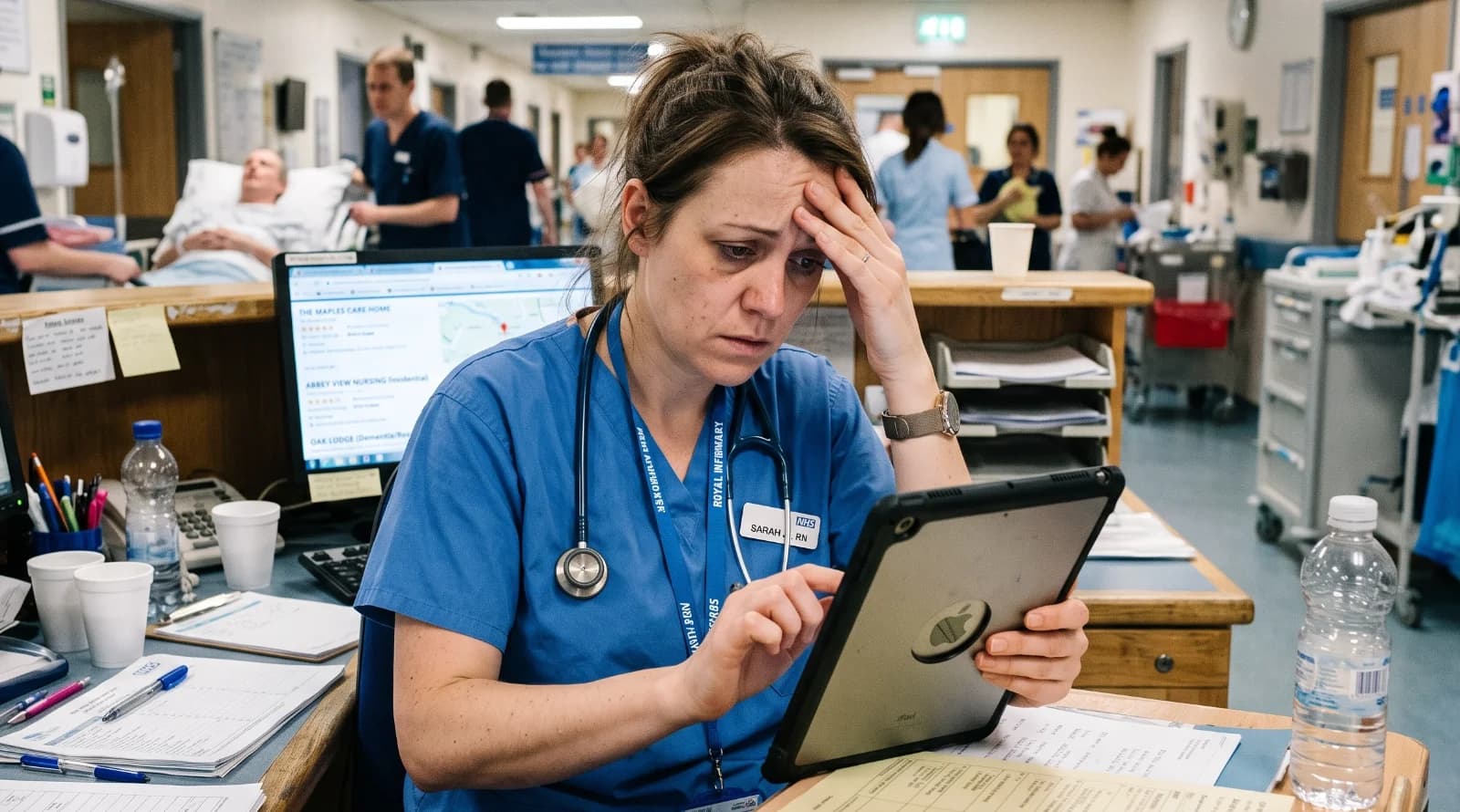
The route to a care home has moved online. When a family realises a relative can no longer manage at home, the search rarely starts with a phone call. It starts with a phone in someone's hand, typing things like "care homes near me", "nursing home with availability" or "dementia care in our area".
They read reviews, check CQC ratings, compare a handful of homes and form an opinion long before they ever pick up the phone.
If your home does not appear at that moment, you are invisible to the very families most likely to choose you. Being found first, on Google and on Bing, is no longer a nice extra. It is the front door to your occupancy, and it is where the race to fill a bed is quietly won or lost.
How do organic enquiries reduce your cost per resident?
The most cost-effective enquiries are the ones you earn rather than rent. This is the work of organic search: a fast, trustworthy website, strong local visibility on your Google Business Profile and the map results + search listings, genuinely useful content that answers the questions families are asking, and steady technical improvement so search engines reward you with rankings.
The beauty of organic visibility is that it compounds. A well-written local page, or a helpful guide on choosing a care home, keeps bringing in enquiries month after month, long after it is published, without you paying for each click.
Work with TRG
Want more private enquiries?
We put your home in front of the families actively searching for care near you.
Over time, this drives your cost per enquiry down and builds an asset you own outright. Add conversion rate optimisation, which turns more of your existing visitors into real enquiries through clearer journeys and stronger calls to action, and you fill more beds from the same traffic without spending another penny on advertising.
The one honest caveat is that organic growth takes time to build. It is the right foundation for any home that wants steady, affordable enquiries for years to come, but it is rarely the fastest fix when you have a bed sitting empty this week. The sooner you start with it, the better in the medium to long term.
What if you need beds filled now? PPC and landing pages
This is where paid media earns its place. When a vacancy needs filling quickly, pay-per-click advertising on Google and Meta puts your home in front of families who are searching for care in your area at that exact moment. You are not waiting for rankings to mature over months. You are visible within hours, sometimes quicker.
The key is where those clicks go. Sending paid traffic to a slow, general homepage wastes money and buries the message. Instead, we send it to dedicated landing pages, built for one purpose only, which is to convert.
They speak directly to the family's situation, show your CQC rating and your room availability, and make enquiring effortless. The enquiry then lands in your inbox instantly, so your team can follow up while interest is at its highest.
Done well, the economics are compelling. One of our recent care campaigns delivered eighty-six enquiries within 2 weeks with a good cost per lead/enquiry.
Set that against the three thousand pounds a week a single empty bed can cost you, and a small number of well-placed enquiries pays for the whole campaign many times over. Paid media is the tap you can turn on the moment you need beds filled fast, and turn down again once occupancy is healthy.
Bringing organic and paid together
The smartest approach is not organic or paid, it's both. It is working as one plan. Organic search builds your long-term foundation and steadily lowers your cost per enquiry. Paid advertising and purpose-built landing pages give you a fast lever to pull whenever a bed falls vacant and needs filling now. Together they keep enquiries flowing in good times and lean times alike, so you are never left waiting and hoping.
That is exactly how we think about it at TRG Digital. Everything we build, from search optimised websites to our own care home directory CareAssura, exists to do one job: turn online visibility into real enquiries, visits and move-ins. Because in this sector, an empty bed is never just an empty room. It is care not being delivered, revenue lost for good, and a family who chose someone else. Filling those beds, and filling them quickly, is the single most valuable thing your marketing can do.
If you have rooms to fill, we would be glad to show you what a joined-up plan could look like for your home. The sooner the enquiries start, the sooner those beds stop costing you.