How to fill empty beds without paying a directory

Written by Len Burgess, Founder
Len Burgess is the founder of TRG Digital, a specialist digital agency for the UK care sector. He has worked in SEO and digital marketing for over a decade and writes about search, ranking factors and lead generation through a data-first lens: read the data, apply best practice and logic, test, and repeat until you rank.
Connect on LinkedIn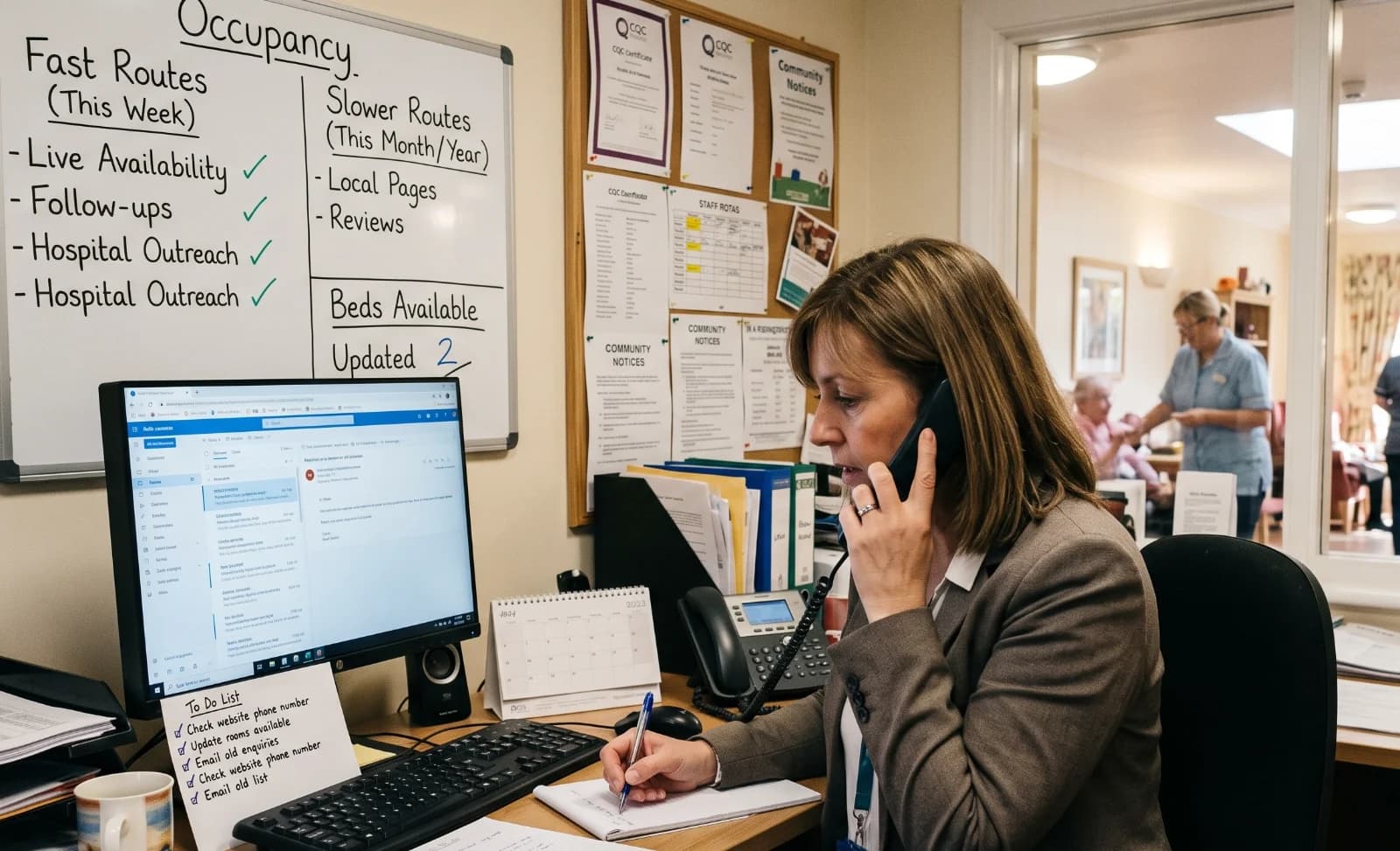
Empty beds get filled by working several routes at once, not by buying a directory upgrade. The routes sort by speed: some work in days, some in weeks, some in months. Search visibility will not fill a bed this week, and any provider promising otherwise is selling you something. Start with the fast routes, then build the slower ones behind them.
What can I do this week to fill empty beds?
Put live availability on your own website and your Google Business Profile. A family searching at 9pm from a hospital ward should see you have a room before they ring anyone else.
Most care home websites say nothing about current availability, which means families call the homes that do. A simple "rooms available" badge, kept current, removes the guesswork and makes your home the obvious first call.
Reply to every open enquiry the same day, including the ones from months ago that went quiet. The fastest bed fill is usually a conversation you already started. A family who enquired in January may still be deciding, or their situation may have changed. A short, practical reply costs nothing and occasionally turns an old lead into a tour booked this week.
Ring the hospital discharge teams and adult social care leads covering your catchment. Tell them specifically what you have free and who you can take. Discharge teams work under constant pressure and remember the homes that make their job easier. A clear, current picture of your availability is more useful to them than any brochure.
Check that the phone number and enquiry form on your website actually reach a person. A silent form is the cheapest problem to fix and the most common. Ring the number yourself from a mobile, submit the form, and see what happens. If the answer is nothing, fix that before spending anything on advertising.
Why does a directory upgrade not fill beds on its own?
A directory listing puts you in a queue beside every other home in your postcode. The family still chooses based on what they find when they click through to your website, your reviews, and your photos. If those are weak, the upgrade simply delivers more people to a page that fails to convert them.
Work with TRG
Struggling to fill your beds?
See how we turn local searches into pre-qualified enquiries, delivered straight to your home.
Paying for placement rents attention you do not own. The moment you stop paying, the enquiries stop. That money is gone, and you have built nothing that keeps working. Rented leads are a cost, not an asset.
The directory is not the villain. The practice is. A listing alone will not fill beds, but a listing that points to a strong website with live availability, clear fees and genuine reviews is worth having. The distinction matters because directories can play a useful role in a wider plan.
Money spent on rented leads is money not spent on the availability, reviews and follow-up that compound. Those routes build on themselves. A review earned this month still works next year. A follow-up call made today can fill a bed tomorrow. The question is always what the spend produces after the invoice is paid.
What can I fix this month to increase care home occupancy?
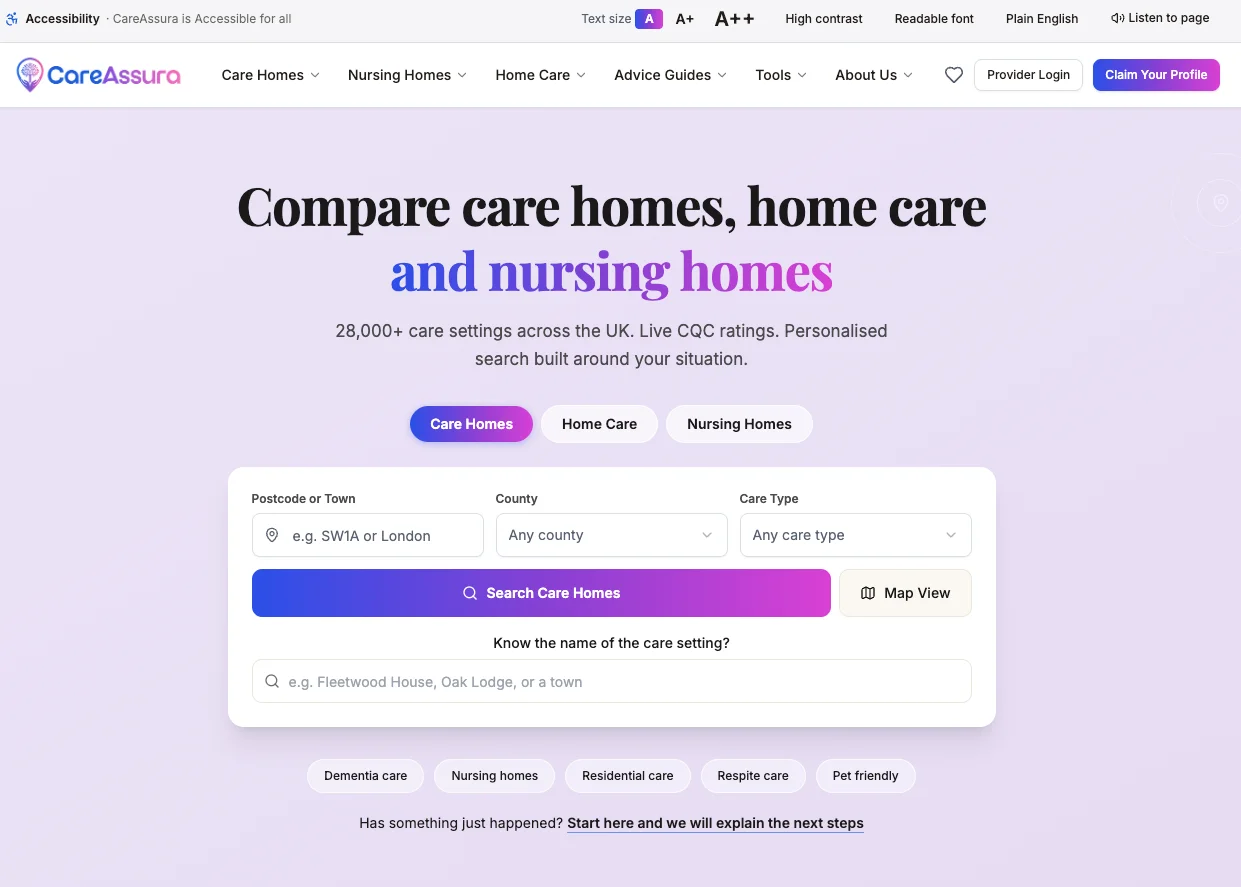
Build a local page for each town and area you genuinely serve, written for the searches families make. A family in Chelmsford searching for dementia care wants to know you understand Chelmsford, not that you have a keyword list. Each page should name the area, describe what you offer there, and make the next step obvious.
Ask every happy family for a review and reply to all of them. The star rating decides whether a family enquires after they find you. A home with 4.8 stars and recent, specific reviews reads differently to a family than a home with 3.9 stars and nothing posted in eight months. Reviews are the social proof families look for before they pick up the phone.
Build referrer relationships with the people who recommend care for a living. Social workers, GPs, hospices, district nurses and solicitors handling estates all talk to families at the exact moment care becomes urgent. A short visit, a clear description of who you can take, and a direct phone number for the person who handles admissions can make you the home they mention first.
Make the enquiry journey obvious on a phone. One clear next step, fees answered, and a tour bookable without a phone call. Most families researching care do it on a mobile, often late at night. If they cannot find your fees, your availability or a way to book a tour in under a minute, they move on.
How long does search visibility take to fill a bed?
Search visibility will not fill a bed this week. It takes months to mature, and any provider promising otherwise is selling you something. The work is worth doing, but it belongs in the background while the faster routes do the immediate job.
Search compounds. The work you do this quarter is still producing enquiries next year without a cost per click. That is the difference between search and rented leads. A page that ranks for "dementia care in Chelmsford" keeps working whether you are paying attention or not.
The realistic order is technical fixes and local pages first, then content, then rankings and enquiries following over months. Technical fixes mean speed, structure and mobile usability. Local pages mean the towns you actually serve. Content means answering the questions families ask. Rankings come after all of that, not before.
Pair search work with paid advertising when a bed is empty now, and you cannot wait for organic to mature. Paid campaigns can deliver enquiries this week while the slower search work builds behind them. The two routes work together, but they are not interchangeable.
Work with TRG
Want more private enquiries?
We put your home in front of the families actively searching for care near you.
What content actually answers the questions families ask before they enquire?
Answer funding first. Local authority versus private pay, means testing, deferred payment, NHS continuing healthcare. That is what families search for at night, often from a hospital ward, when they are trying to work out what care will cost and who pays. A page that explains funding in plain English earns trust before the family ever calls.
Cover fees, what happens next, visiting, care types and CQC ratings on your own pages. Families want to know the practical things: what a room costs, when they can visit, what dementia care actually involves, what your last inspection found. Silence on any of these reads as evasiveness.
Use tools rather than words where a family needs a number. A funding calculator or cost estimator on your site turns a question into an enquiry. TRG Digital builds care tools that do exactly this: a funding calculator, a cost of care estimator and a deferred payment checker that give families a real answer on your own website, not a generic one elsewhere.
Keep publishing on a schedule. One good page is a start. A steady library is a lead source. The home that answers twenty real questions is the home Google sends families to, and the home families trust before they ever meet you.
How do I know which route filled which bed?
Ask every enquirer one question at first contact: how did you find us. Record the answer in your enquiry log. The answer is not always precise, but patterns emerge quickly. You will learn whether families found you through Google, through a review, through a discharge team or through a recommendation.
Track enquiries, tours booked and beds filled by source. Not impressions, not clicks. Only the first three pay the wages. A source that produces enquiries but no tours needs attention. A source that produces tours but no beds needs a different conversation.
Give each route a fair window before judging it. Availability and follow-up can be judged in days. Local pages and reviews need weeks. Search visibility needs months. Judging a search campaign after three weeks is like judging a new manager after their first shift.
Review the fee mix alongside occupancy. A filled bed at a local authority rate is not the same win as a private one. Two homes can both report full occupancy and have very different financial positions. The question is not just whether beds are full, but who is in them and what they pay.