How quickly should a care home respond to an enquiry?

Written by Len Burgess, Founder
Len Burgess is the founder of TRG Digital, a specialist digital agency for the UK care sector. He has worked in SEO and digital marketing for over a decade and writes about search, ranking factors and lead generation through a data-first lens: read the data, apply best practice and logic, test, and repeat until you rank.
Connect on LinkedIn
A care home should respond meaningfully within the hour for most private enquiries. The first home to reply properly usually wins the tour, and the tour usually wins the resident.
This is a manager's problem to fix, not a marketing one. It comes down to triage, cover, and a script that anyone on shift can use.
Keep reading and get our thoughts on how to implement this and how we do this for our clients.
Why does response speed decide which care home gets the resident?
Response speed decides who gets the resident because families contact multiple homes in one sitting and shortlist whoever answers first. A family searching from a hospital ward at 9pm will typically enquire with three to five homes before they stop. The home that replies with a named person and a tour time while the others sit silent is the home that gets the visit.
The decision window is short. According to TrustedCare Pro, 79% of nursing care enquiries are placed within four weeks, and 67% of residential enquiries do the same. That means the family is not browsing for months. They are choosing within days, often within hours, which is why having the correct information on your website at the start is so important.
Dementia enquiries move more slowly through to placement, but the family's shortlist still forms in the first 24 hours. The slower the eventual decision, the more important the first reply becomes. A family that feels acknowledged early will keep your home on the list while they work through funding and care needs.
Slow follow-up is a coordination problem, not a demand problem. When teams cannot see incoming enquiries clearly or assign follow-ups, families receive slow responses, according to Centrim Life. The enquiry was there. Nobody owned it.
The cost of a cold enquiry is an empty bed. And an empty bed often becomes another local authority placement at a fee below cost. Response speed is not about politeness. It is about fee mix and occupancy.
What actually happens to an enquiry that waits until Monday?
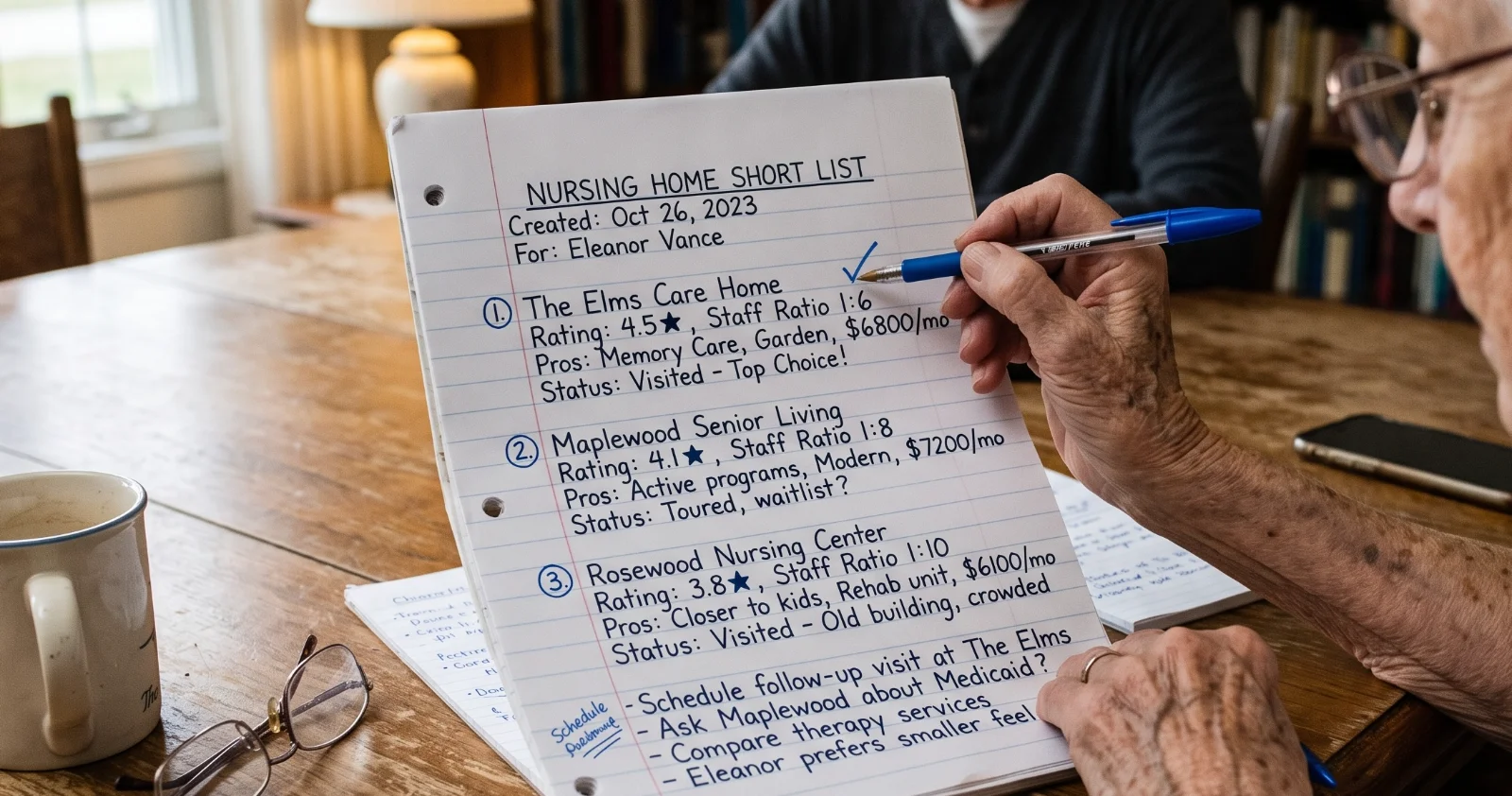
An enquiry that waits until Monday is usually gone. The timeline is predictable. A family submits an enquiry on Friday at 9pm. It sits in a shared inbox all weekend. Someone opens it on Monday at 10am. By then, the family has booked two tours with other homes and has no reason to take your call.
Families judge care quality by first contact. The CQC asks whether services are responsive to people's needs, according to the CQC. A family does the same thing in the first hour. A slow reply tells them the home is disorganised, and they assume the care will be too, which is the worst of the worst.
The CQC expectation on complaints is that concerns are taken seriously and responded to in good time. The same standard carries into enquiries. A family that cannot get a reply before Monday has already formed a view of how the home handles concerns, and even if they book a tour or visit, you are already on the back foot with them.
Work with TRG
Struggling to fill your beds?
See how we turn local searches into pre-qualified enquiries, delivered straight to your home.
The loss compounds. A slow reply does not just lose one resident. It loses the review that family would have left, the referral they would have given to a friend, and the private fee that would have improved the home's mix. One missed weekend costs far more than one bed.
The villain is the generic approach. A contact form that emails one person, who is on annual leave, is a system designed to lose enquiries. The reader is not the problem. The process is.
What is a simple triage script for care home enquiries?
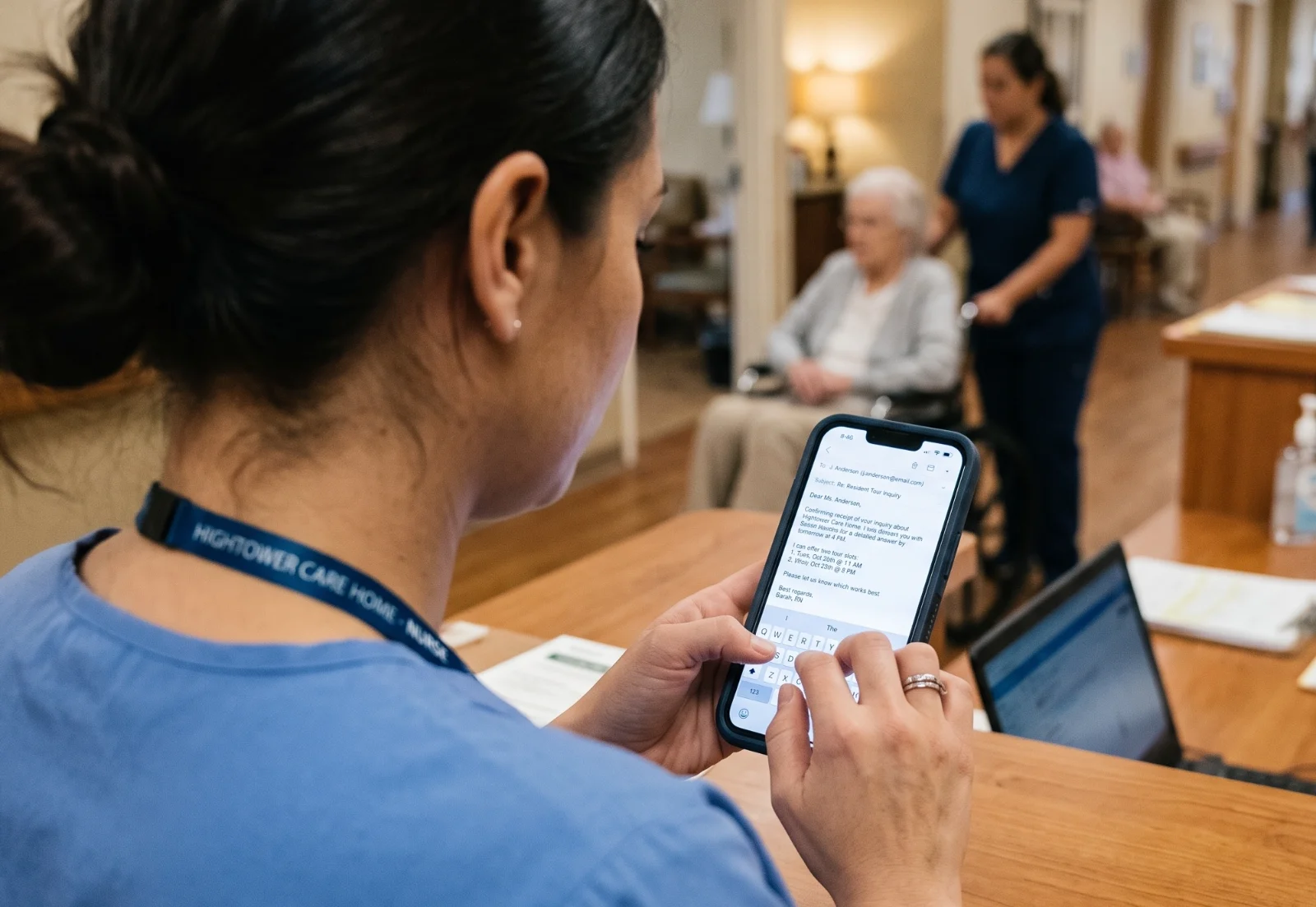
A simple triage script sorts every enquiry into three buckets on arrival: ready to tour, needs funding answers first, and not yet ready. The first reply confirms receipt, names a person, gives a time for the full answer, and offers two tour slots. That is the whole script.
The fee and funding question should be answered early. Families comparing homes drop the ones that stay vague on cost. A home that says "we can talk about fees on the tour" loses to the home that gives a guide price and explains the funding routes in the first reply.
The script must be short enough to send from a phone between shifts. A registered manager or senior carer on duty should be able to send it in under two minutes. If the script needs a laptop and a quiet office, it will not get used.
Every reply should be logged with a handover note. The note records what the family asked, what was promised, and when the next contact is due. That way the next person on shift picks up the enquiry without asking the family to repeat themselves.
The point of triage is speed with accuracy. A fast reply that answers the wrong question is not much better than no reply. The three buckets keep the first response useful without slowing it down.
Who covers evenings and weekends?
Evenings and weekends need a named responder, not a shared inbox. Most private enquiries arrive outside office hours, when families are free to search and call. A Monday to Friday inbox misses the highest intent window entirely.
A rota with one named responder per evening and one per weekend day beats a shared inbox nobody owns. The rota does not need to be complicated. It needs to be visible, agreed, and checked.
The standard should be realistic. An automated acknowledgement within minutes, then a human reply within the hour during cover hours. The automated reply sets the expectation. The human reply wins the tour.
The responder needs authority to offer tour slots without waiting for the manager and access to the diary to book the tour/visit in. If every weekend enquiry has to wait until Monday for a diary decision, the rota is pointless. Give the responder access to the tour diary and the triage script.
Review the rota monthly against when enquiries actually arrive. If most enquiries come on Sunday evenings, cover Sunday evenings. The data will show where the gaps are. The rota should follow the enquiries, not the office hours.
What should you say when you have no availability?
Reply anyway and reply fast. A waiting list place and a clear date beat silence. The family may need a room next month, or they may know someone who needs one now. Silence loses both.
Offer the next best thing. A tour for a future room, a sister home if you have one, or a call back when a bed frees up. The family asked you for help. Give them a useful answer even when the answer is not a room today.
Live room availability on your website helps families self-qualify before they enquire. A rooms available badge means the family knows what to expect, and the enquiry that does arrive is warmer. TRG Digital builds this into its care tools, which is available for all our clients.
Keep the family warm with a monthly check-in. Circumstances change quickly. According to TrustedCare Pro, 79% of nursing enquiries are placed within four weeks. A family that had no bed available last month may be ready to move this month.
Never let an unavailable enquiry go unlogged. It is your best forecast of next month's occupancy. A list of warm families waiting for rooms is worth more than any marketing campaign.
Work with TRG
Want more private enquiries?
We put your home in front of the families actively searching for care near you.
How does TRG Digital help care homes respond to enquiries faster?
TRG Digital helps care homes respond faster by removing the delays that happen before and after the first contact. The work starts on the website, where families decide whether to enquire at all.
Live bed availability from Care Tools puts a rooms available badge on your website. Families see space the moment they land and enquire while you can help. The enquiry that arrives is already qualified.
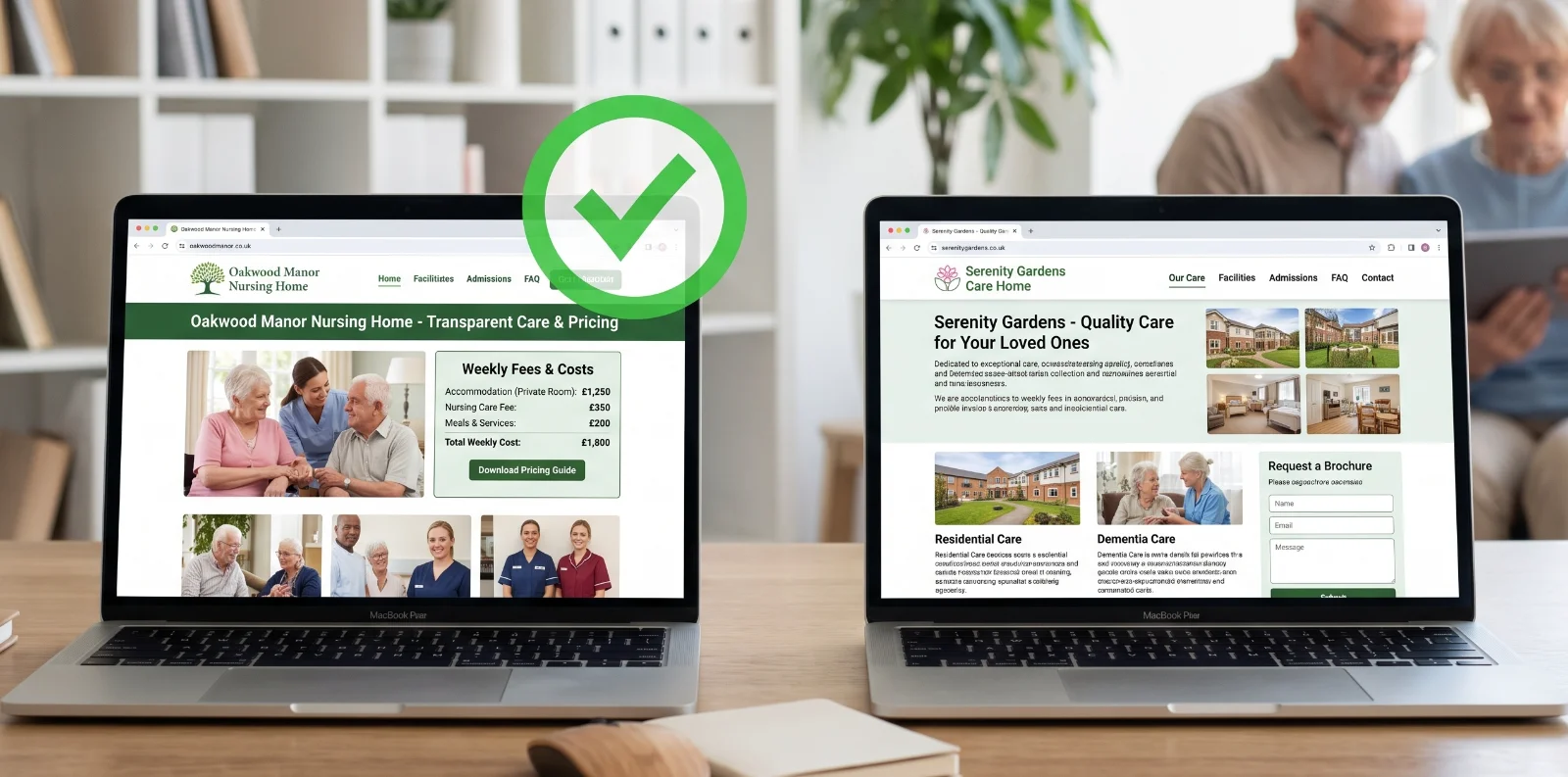
The care funding calculator and cost of care estimator answer the fee question on the page. The first human reply can then focus on the tour rather than the means test. Families get the answer they were searching for, and your team gets a shorter conversation.
Conversion rate optimisation tightens the enquiry journey so fewer families drop out before they contact you. A faster, clearer path from search to enquiry means more chances to respond.
Enquiry generation delivers pre-qualified enquiries by care type, area and funding. Triage starts with better information, so the first reply is more useful.
Website development builds fast, mobile-first pages structured around how families actually choose care. The site loads quickly on a phone, answers the questions families ask, and makes the next step obvious.
How do you measure whether response speed is improving?
Measure time to first reply, not reply volume. The number of replies sent matters less than how quickly they went out. Report time to first reply weekly alongside enquiries and tours booked.
Measure enquiry-to-tour conversion and tour-to-move-in conversion separately. If enquiries are up but tours are flat, the first reply may be too slow or too vague. If tours are up but move-ins are flat, the problem is elsewhere.
Log the reason each enquiry goes cold: no availability, funding, chose another home, no further contact. The reasons show where the process is leaking. A home that loses enquiries to "no further contact" has a follow-up problem.
Compare private pay and local authority enquiry response times. The fee mix depends on it. Private families have more choice and shorter patience. If private enquiries are answered slower than council ones, the mix will shift the wrong way.
Review the numbers with the same discipline as occupancy. Response speed is an occupancy metric. Adjust the rota and script from the data, not from habit.
Key Takeaways
Families typically enquire with three to five homes in one sitting, and the first meaningful reply usually wins the tour.
79% of nursing care enquiries are placed within four weeks, against 67% of residential enquiries, so the follow-up window is short.
Dementia enquiries take longer to place, which makes consistent follow-up more important, not less.
CQC expects services to be responsive to people's needs, and slow first contact undermines that before an inspector ever visits.
A triage script should sort enquiries into ready to tour, needs funding answers, and not yet ready.
Evening and weekend cover matters because most private enquiries arrive outside office hours.
When there is no availability, a fast reply with a waiting list place and a clear date keeps the family warm.
Conclusion
Response speed is an occupancy decision, not a courtesy. Families contact several homes in one sitting and shortlist whoever answers first, so the home with a named responder, a simple triage script and real evening and weekend cover will win more tours and more private residents.
The fix starts with the manager: own every enquiry, reply within the hour, and measure time to first reply as closely as you measure occupancy. TRG Digital helps by removing the delays on either side of that first reply.
Live bed availability from Care Tools shows families you have space before they enquire. The care funding calculator and cost of care estimator answer the fee question on the page, so your team can focus the first reply on booking a tour.
Conversion rate optimisation, enquiry generation and fast, mobile-first website development mean more families reach you, better qualified and ready to talk.
If enquiries are going cold in your inbox, TRG Digital can help you turn them into tours.
Part of our guide to filling empty beds.