
Should you publish your care home fees on your website?

Written by Len Burgess, Founder
Len Burgess is the founder of TRG Digital, a specialist digital agency for the UK care sector. He has worked in SEO and digital marketing for over a decade and writes about search, ranking factors and lead generation through a data-first lens: read the data, apply best practice and logic, test, and repeat until you rank.
Connect on LinkedIn
Yes, publish something, but rarely your full fee schedule. Hiding all pricing costs you enquiries from self-funding families who shortlist on price transparency.
Publishing a fixed weekly figure creates problems of its own, because care needs, room type and funding route all change the real number. The workable answer is a clearly worded "from" range plus a funding explainer.
Keep reading and get all the details on our recommendations.
Why do most care homes hide their fees?
Most care homes hide their fees for understandable commercial reasons. Operators worry about being undercut by a competitor down the road. Fees are often negotiated per resident based on room availability and needs required, not set as a single public price. Local authority rates sit far below private rates, and publishing one figure while accepting another feels like exposing the gap. There is also a genuine concern about committing to a number before a care needs assessment has taken place.
The commercial logic is reasonable, but it shifts the cost onto the enquiry. Families who cannot find a price assume the worst and self-select out before they ever call. They do not ring to ask. They move to the next website, which is the worst possible option.
The fee mix problem makes this silence more expensive than most operators realise. Homes reliant on local authority placements at below cost have the most to gain from self-funders, and the most to lose by staying silent.
According to Age UK, the average care home place costs around £1,100 a week, while Carehome.co.uk puts the 2026 average self-funder residential fee at £1,298 a week. A home that hides its private rate is quietly walking away from that margin.
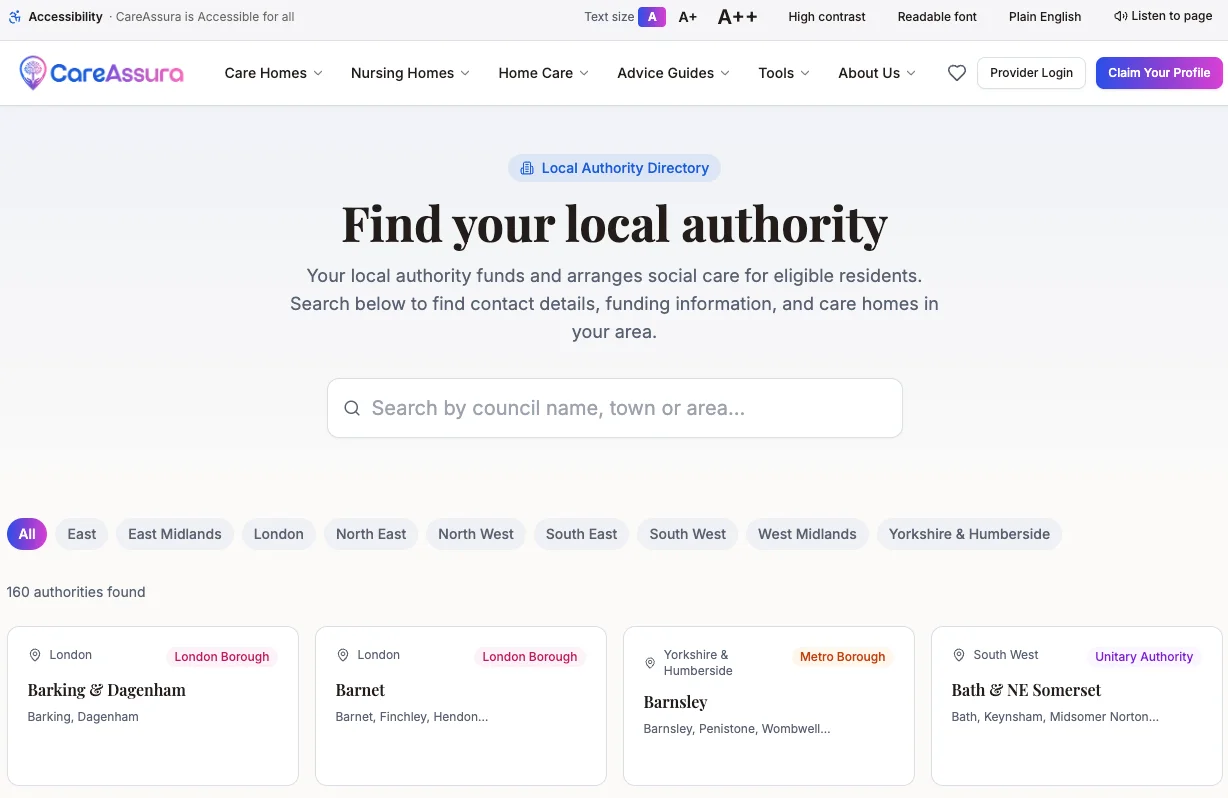
You can also use our local authority search feature on CareAssura, which provides pricing details, and you can work out your range from them.
What happens when families cannot find a price on your website?
Families searching at 9pm from a hospital ward compare three or four homes in minutes and drop any site that is silent on cost. The search is urgent, the shortlist is brutal, and price is one of the first filters applied. A website that says "call us for fees" does not get the call. It gets closed.
Silence does not stop the question; it moves it. The family goes to Google reviews, forums and the competitor who did publish a range. The competitor gets the enquiry, the tour and the bed. The silent home never knows the family existed.
The families most put off by missing fees are often the self-funders you most want. They are the ones doing the sums, comparing weekly costs against savings and property, and working out how long the money will last.
According to Carehome.co.uk, the average annual cost of residential care for a self-funder in 2026 is £67,496. That is a serious financial decision, and families making it expect a serious answer on price. A listing alone will not fill beds, and a website that answers nothing will either.
Work with TRG
Struggling to fill your beds?
See how we turn local searches into pre-qualified enquiries, delivered straight to your home.
What is the case for publishing your fees in full?
Transparency shortlists you. A published range filters out enquiries that were never going to convert and attracts families who can afford you. The phone stops ringing with callers who fall silent when they hear the number. The tours you do run are with families who already know the rough cost and are still interested.
It reduces wasted time. Managers spend hours quoting figures that change after assessment anyway. A published range answers the first question before the call, so the conversation can start on care needs, visiting and availability instead of a fee reveal.
Self-funders are the margin. According to Carehome.co.uk, average self-funder residential care in 2026 is £1,298 a week and nursing care is £1,535.
One extra private resident is worth far more than a handful of local authority placements; we already know that local authority pay is, on average, 85% of the private weekly fee. Publishing a range supports the fee mix shift from council rates to private pay, and that shift is what keeps many homes viable.
What are the risks of publishing a fixed weekly fee?
A single figure becomes a commitment families hold you to. Care needs, room type and funding route all change the real number, and a flat published price cannot explain any of that. The family arrives expecting £1,100 a week, the assessment says £1,400, and the relationship starts with disappointment.
Top-up fees complicate the picture further. According to Independent Age, a top-up fee is the difference paid when someone chooses a home costing more than the council will pay, and it is usually paid by a relative, friend or charity rather than the resident. A flat published price does not explain that mechanism at all.
Regional variation is real. Carehome.co.uk notes that London fees sit well above the North West and South West of England, so a national or group-wide figure can mislead. Council-funded residents also pay a different rate entirely, and publishing only your private rate can look like you are hiding the rest.
What wording works for a fee range that does not commit you?
Lead with "from £X per week" and state plainly that the final figure depends on care type, room and funding route. The word "from" does the heavy lifting. It gives families a real starting point without committing you to a fixed price for every resident.
Show the range by care type. Residential, nursing, and dementia care all sit at different price points, and nursing dementia care sits at the top. According to Carehome.co.uk, residential dementia care averages £1,343 a week in 2026, while nursing dementia care averages £1,564. Publishing those bands side by side answers the question families actually ask, and by providing the information, they are more likely to make contact with you.
Explain the funding routes in the same breath. According to Age UK, people in England with capital over £23,250 must pay their own fees as a self-funder. Those with capital between £14,250 and £23,250 receive council support and contribute from income plus a tariff income. The NHS adds that a deferred payment scheme may be available if savings are below £23,250 but money is tied up in property. Flag the Scotland and Wales differences too. According to Independent Age, the upper capital limit in Scotland is £36,750, and the threshold in Wales is £50,000, so cross-border families are not misled.
Work with TRG
Want more private enquiries?
We put your home in front of the families actively searching for care near you.
How does TRG Digital help you publish fees without losing control of the conversation?
Website Development builds the fees page as part of a site structured around real care searches, with the range, funding routes and next step on one clear page. The page is designed for how families actually read: on a phone, under pressure, comparing homes.
Care Tools adds a care funding calculator and cost of care estimator to your site. Families work out their own likely split between themselves, the local authority and the NHS before they call, which means the call that follows is warmer and better informed.
Content Creation answers the questions families actually ask about fees, top-ups and what happens if money runs out, published steadily and tied to your SEO. Each piece keeps working long after it goes live.
Local SEO and Google Business Profile put that fees page in front of families searching in your catchment, so the transparency does the work. Conversion Rate Optimisation tightens the journey from fees page to enquiry, so more of the families who read your range actually get in touch.
How should you handle fees if you are a local authority heavy home?
Publish the private range, then explain in plain terms how council funding works and what a top-up means. If most of your beds are council funded, publishing a private rate can confuse the families you already serve, so the explainer matters as much as the number. No family should feel misled about who pays what.
Note the council's duty to show choice. According to Independent Age, in England the council must show at least one place that meets needs within budget, in Wales at least two options, and in Scotland a list of homes that could meet the need. Families do not always know this, and explaining it builds trust.
Point families to the deferred payment scheme and the timing rule. The NHS advises contacting the local council about 3 months before savings are expected to drop below the upper capital limit, because councils fund from the date you contact them, not before. That single piece of advice can save a family thousands.
Key Takeaways
In England, people with capital over £23,250 must pay their own care fees as a self-funder.
The average UK weekly cost of residential care for a self-funder in 2026 is £1,298, and nursing care is £1,535.
A top-up fee is the difference paid when someone chooses a home costing more than the council will pay, usually by a relative, friend or charity.
In Scotland the upper capital limit is £36,750, and in Wales the threshold for council help is £50,000.
The NHS advises contacting your local council about 3 months before savings are expected to drop below the upper capital limit.
A "from £X per week" range with a funding explainer gives families the transparency they shortlist on without committing you to a fixed figure.
Average monthly residential care costs £5,192, or £67,496 a year, which is why self-funders research price before they ever call.
Conclusion
Silence on fees does not protect your margin. It hands self-funding families to the competitor who answered the question first. The answer is not a fixed weekly price that becomes a promise you cannot keep, but a clear "from" range by care type, backed by a plain explanation of funding routes, top-ups and council support. That gives families enough to shortlist you while leaving room for the care needs assessment to set the final figure.
TRG Digital helps care homes get this right. Website Development builds a fees page designed for families reading on a phone under pressure. Care Tools adds a care funding calculator and cost of care estimator, so families understand their likely split before they call. Content Creation answers the fee and funding questions families actually search for, while Local SEO, Google Business Profile and Conversion Rate Optimisation put that page in front of families in your area and turn more readers into enquiries.
If your website still says "call us for fees", TRG Digital can help you publish with confidence and keep control of the conversation. Contact us today by clicking the link below, and let's discuss your needs in more detail.