
What do self funding families check before they call a care home?

Written by Len Burgess, Founder
Len Burgess is the founder of TRG Digital, a specialist digital agency for the UK care sector. He has worked in SEO and digital marketing for over a decade and writes about search, ranking factors and lead generation through a data-first lens: read the data, apply best practice and logic, test, and repeat until you rank.
Connect on LinkedIn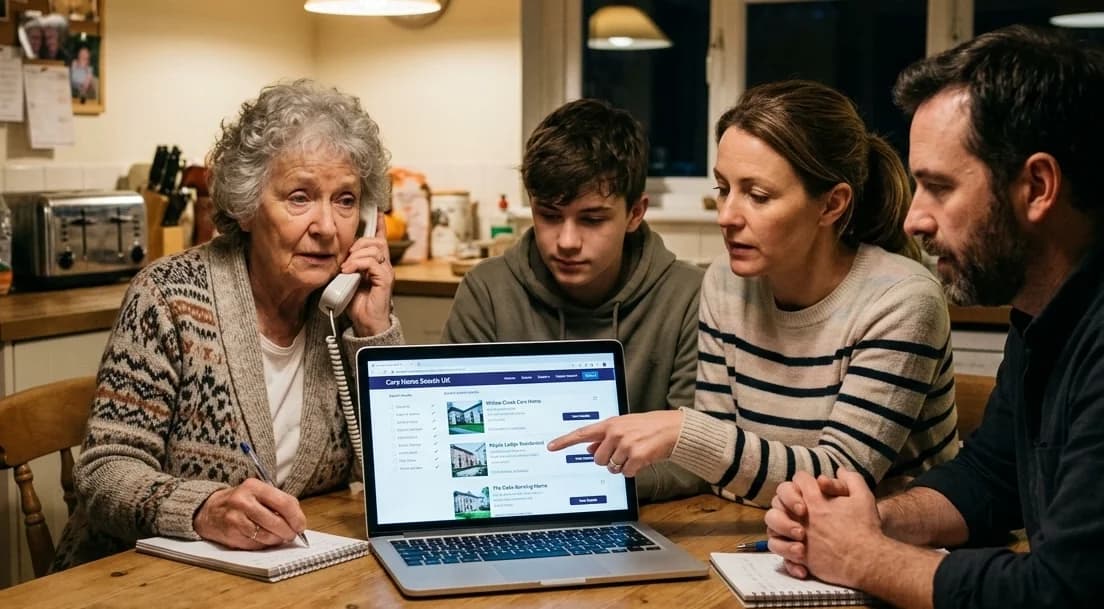
Self-funding families build a shortlist of three or four homes from Google before they ever pick up the phone, often late at night and often from a hospital ward.
The homes still on that shortlist are the ones whose websites answer the family's real questions: fees, rooms, care types, CQC rating, availability and funding.
Everything a home does to attract self-funders starts with passing that silent check.
So keep reading and get more details on the 'silent checks' that take place every time somebody sees your website.
Who counts as a self-funder and why does it matter to your enquiry mix?
A self-funder is someone above the £23,250 upper capital limit in England, someone not eligible for NHS Continuing Healthcare, or someone choosing a home that costs more than the council will fund, according to Age UK.
Around 40% of care home residents in England are self-funders, so this is a mainstream audience, not a niche.
Many self-funders are not wealthy. They are selling a house, and their capital is tied up in property rather than sitting in a bank account, according to the NHS and Age UK.
Self-funders can choose which home to live in, and contracts are usually between the family and the home directly, according to Age UK and Newham Council. That makes them a commercial decision, not a placement decision, and it changes how you present your home, so first impressions count when a search is taking place.
What do families check first on a care home website?
Families check fees, photos, care types, CQC rating and availability first, and they form their shortlist in minutes from search results. The site must load fast and work on a phone, because most of this research happens late at night from a hospital ward or a family kitchen, and sometimes when under pressure.
Fees come first. A reputable care home should clearly outline what is included in the weekly fee, additional charges such as salon services and chiropody, how annual fee reviews work, and contract terms and notice periods.
Real photos of real rooms and real people matter more than polished marketing copy. Families are judging the quality of care by what they see, and stock images read as evasive. If the photos look staged or generic, the family assumes the care is too; however, a caveat: you need permission to use residents' photos on your website. This is something we get asked about all the time, and we tend to steer away from resident photos.
Work with TRG
Struggling to fill your beds?
See how we turn local searches into pre-qualified enquiries, delivered straight to your home.
Care types offered and what happens if needs change are part of the same check. Residential care, nursing care and specialist dementia care carry different staffing levels and different costs; a family needs to know the home can support their relative now and later, especially if their relative has mild dementia and is not suitable for a nursing home.
A recent CQC rating shown plainly, with language that talks about it honestly rather than hiding it, builds trust faster than any testimonial. Families look for the rating and read how the home discusses it.
How should a care home talk about fees on its website?
A care home should publish a weekly fee range and state clearly what it covers. Residential care averages around £1,100 to £1,500 a week, nursing care around £1,450 to £1,700, with London and the South East considerably higher, according to Age UK.
Local authority rates are often below self-funder rates (on average 85% of the weekly fee), so a home that does not accept LA rates may need a top-up or a move. Families weighing private pay against council support need this explained plainly.
Point families to a funding explainer rather than leaving them to guess. The £23,250 upper capital limit, the £14,250 lower limit and the tariff income between them are the mechanics of the means test, according to the NHS and Age UK.
TRG Digital builds care tools that answer these questions on the provider's own site, including a care funding calculator, a deferred payment calculator and a cost of care estimator. The fuller argument for publishing fees is covered in the guide on whether to publish your care home fees online.
What funding routes do self-funders need to understand before they enquire?
Self-funders need to understand Deferred Payment Agreements, the 12-week property disregard, Attendance Allowance and NHS-funded nursing care before they enquire, because each one changes the real cost of care.
A Deferred Payment Agreement lets the council pay for the care home while the family repays later, usually on sale of the home or after death, with interest around 4 to 5% a year plus setup and admin fees, according to the NHS
Eligibility for a Deferred Payment Agreement requires less than £23,250 in savings and assets excluding the home, enough equity to cover the loan, Land Registry registration and a legal charge on the property.
The 12-week property disregard means the home's value is ignored in the financial assessment for the first 12 weeks of a permanent placement; that gives families time to sell without pressure.
Attendance Allowance is a non-means-tested benefit for people over State Pension age who need support with personal care, but it stops after 28 days in a care home if the council is funding.
NHS-funded nursing care is a weekly contribution toward nursing costs for people who need nursing care but do not qualify for NHS Continuing Healthcare.
Work with TRG
Want more private enquiries?
We put your home in front of the families actively searching for care near you.
What happens when a self-funder's savings run down?
When a self-funder's savings fall below £23,250, the local council may step in, and families should ask for a reassessment about three months before they expect to cross that line, according to the NHS and Age UK.
Councils fund from the date of contact, so a family that waits loses money they cannot claim back, according to the NHS. This is one of the most expensive mistakes a family can make, and it is avoidable with a single phone call.
The Personal Expenses Allowance must be left for personal spending, at least £30.15 a week, with council discretion to increase it, according to Age UK.
Deprivation of assets means that if the council believes money or property was given away to avoid fees, it can assess the family as if they still had it, according to Age UK.
How do you show availability and speed of move-in?
You show availability by stating clearly that a room is free now, not in principle. Families searching from a hospital ward need an answer they can act on the same day, because discharge deadlines do not wait.
A live rooms available badge, kept current in seconds, answers that question the moment a family lands on the site. It removes the first point of friction and lets the family move to the next question.
Explain what happens next: enquiry, tour, assessment, move-in date. A family that can picture the process is far more likely to start it. Make the next step obvious on every page, whether that is a call, a tour booking or a brochure request.
How do you turn this checklist into more self-funding enquiries?
You turn the checklist into enquiries by auditing your site against the family's exact questions: fees, photos, care types, CQC, availability and funding explainer. If any one of those is missing or hard to find, you are losing shortlist places.
The wider enquiry generation picture is covered in the guide on how to increase nursing home enquiries. The same questions families ask are the ones Google rewards, so answering them serves search and conversion at once.
A free site check against this checklist is the simplest next step. It shows you exactly where your website passes and where it fails the silent test that self-funding families run before they call.
Conclusion
Self-funding families decide which homes to call before they speak to anyone, and they decide from your website. A home that answers their questions clearly makes the shortlist, and one that leaves them guessing is dropped without ever knowing. Those questions are about fees, rooms, care types, CQC rating, availability and funding. TRG Digital builds care home websites around exactly those questions. That means published fee ranges, real photos, a CQC rating shown plainly and a next step that is obvious on every page.
Our care tools let families work out their costs on your own site instead of someone else's: a care funding calculator, a deferred payment calculator and a cost of care estimator. A live rooms available badge answers the availability question the moment a family arrives. To find out where your site stands now, start with a free site check against this checklist.
It shows where your website passes the test self-funding families run before they call, and where it fails.